Guide · 10 min read
Is SEO dead? What changed, what didn't and what to do now
Is SEO dead? We sell GEO, so you might expect us to say yes. We don't. The data from Google itself and from independent studies points to something less dramatic: fewer clicks per search on many queries, a small but growing stream of visitors from AI assistants, and a search index that still decides who gets seen and cited. This article separates what has changed from what has not, explains our position, and lists what we would do in 2026.

Is SEO dead? The short answer
No. What is shrinking is one specific model of SEO: rank a page, wait for the click, count the sessions. Answers now appear on the results page and inside chat assistants, so a ranking position converts into fewer visits than it used to on many informational queries.
What is not shrinking is the need to be crawlable, indexed, understood and trusted. Google's AI features, Copilot and, in part, ChatGPT search build their answers from a search index. If your pages are not in it, they cannot be quoted. That is why we answer the question is SEO dead with a no, and then add that SEO alone is no longer enough.
Why people keep asking whether SEO is dead
The question is old. It came back with every big Google change: mobile results, featured snippets, answer boxes. What makes this round different is that the answer itself is now generated, and the user can get what they wanted without visiting anyone.
Publishers and content sites feel it first, because their pages answer exactly the informational questions that AI summaries now cover. A plumber, a law firm or a software company with commercial pages sees a smaller effect, and sometimes none. So when someone tells you is SEO dead is a settled question, ask which queries and which business they are talking about.
What has changed: the answer appears before the links
Google now shows AI-generated answers in two places. AI Overviews sit at the top of normal results. AI Mode is a separate, conversational search experience; we cover it in detail in our guide to Google AI Mode.
The scale is large. In its Q2 2026 earnings remarks (22 July 2026), Alphabet said AI Mode had passed 1 billion monthly active users since its global expansion the previous October. In its Q3 2026 remarks (28 October 2026), Google added that AI Mode queries are on average three times longer than traditional searches.
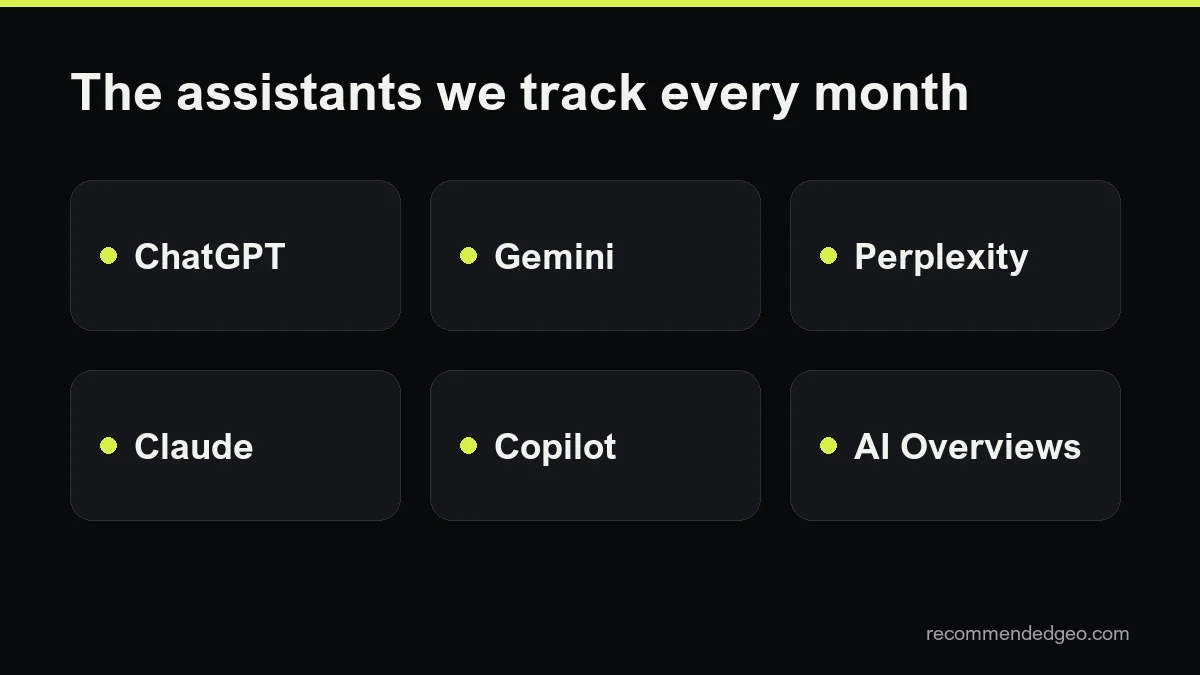
Outside Google, assistants such as ChatGPT, Perplexity, Gemini, Claude and Copilot answer questions people used to type into a search box. Many of these answers name brands and products directly, which is the visibility GEO works on.
What has changed: fewer clicks per search
This is the part of the is SEO dead debate with the most evidence behind it. Three studies are worth knowing, each with its own method and limits:
- Pew Research Center tracked the browsing of 900 US adults in March 2025. Users clicked a traditional result in 8% of visits to a results page with an AI summary, against 15% without one. Only 1% clicked a link inside the summary. Source: Pew Research Center, 22 July 2025.
- Ahrefs compared 300,000 keywords using Search Console data from December 2025. When an AI Overview was present, the top-ranking page had a 58% lower average click-through rate. Its April 2025 version had measured 34.5%. Ahrefs presents this as a correlation, not proof of cause (published 4 February 2026).
- SparkToro and Datos estimated in July 2024 that 58.5% of US Google searches and 59.7% of EU searches ended without a click to any website. That data predates the wide rollout of AI Overviews, so it describes a trend that was already there.
Google reads the situation differently. In an August 2025 post, Liz Reid, head of Google Search, wrote that total organic click volume to websites had been relatively stable year over year, with slightly more quality clicks. Both views can be partly true: total clicks can hold steady while clicks per query fall and shift between sites.
What has changed: assistants send visitors, but not many yet
AI assistants do send traffic. It is growing fast from a very small base. SE Ranking analysed 101,574 websites from January 2025 to April 2026 and published the results on 18 June 2026:
- AI platforms accounted for 0.32% of all website traffic in 2026, up from 0.24% in 2025 and 0.02% in 2024.
- Organic search accounted for 42.75% of all website traffic in the same period.
- ChatGPT produced about three quarters of the AI referral traffic they measured.
Two caveats. Referral data undercounts AI influence, because many people read a recommendation in a chat and then search for the brand or type the URL. And averages hide large differences by sector. We explain how to see this in your own analytics in ChatGPT traffic in GA4.
What has not changed: Google is still where most search happens
According to Statcounter, Google held 91.05% of worldwide search engine market share in October 2026, with Bing at 4.8%. Source: Statcounter Global Stats.
Usage is not falling either. In its Q3 2026 remarks, Google said its year-over-year query growth rate was the highest in five years. Read together with the SE Ranking figures, the picture for 2026 is clear: search engines remain the largest source of visits for most sites by a wide margin, and AI referrals are a small, growing addition.
What has not changed: the index decides who gets cited
This is the fact that makes the is SEO dead question misleading. Google states that there are no additional requirements to appear in AI Overviews or AI Mode, and that a page must be indexed and eligible to be shown with a snippet to be a supporting link. Source: Google Search Central, AI features and your website.
Other assistants work in a similar way. Copilot's answers draw on Bing's index. OpenAI's help pages say ChatGPT search sometimes partners with third-party search providers, Bing among them, and OpenAI also runs its own search crawler. We explain the mechanics in how AI search works.
In practice, the technical basics of SEO carry straight over: crawlable pages, clean indexing, fast and accessible HTML, clear titles, internal links and structured data that matches the visible text. A site that fails these basics is weak in classic search and in AI answers at the same time.
Our view: SEO is the foundation, GEO is the layer on top
We do not think you should choose between the two. SEO gets your pages into the indexes that AI systems read. GEO works on what those systems do with them: whether your brand is named when someone asks for a recommendation, whether the description is accurate, and whether the sources the assistant trusts mention you. The differences are laid out in GEO vs SEO.
That is also why every one of our plans includes basic SEO: a technical review, Search Console and Bing Webmaster Tools setup and monitoring, and titles, descriptions and internal links on the pages we work on. Growth adds a monthly SEO health check, and Scale adds keyword research and content built to rank on Google. It covers the SEO that GEO depends on; a full SEO programme with link building or migrations sits outside the plans. If you already work with an SEO agency, we coordinate with them; see GEO agency vs SEO agency for how to split the work.
We also avoid the opposite mistake. GEO is sometimes pitched as a replacement for SEO. If your site is not indexed properly, no amount of prompt tracking or brand mentions will fix that.
What to do in 2026
- Fix the base first. Check indexing in Google Search Console and Bing Webmaster Tools, confirm that robots.txt and your CDN let search and AI crawlers in, and correct errors on the pages that matter commercially.
- Rewrite key pages so they answer directly. Put the answer to the main question near the top, in plain sentences that can be quoted without context. Our AI SEO guide covers the on-page side.
- Change what you report. Rankings alone no longer describe visibility. Add impressions, branded search and the share of answers that name you for a fixed set of questions; see how to measure AI visibility.
- Build presence outside your site. Assistants lean on reviews, directories, comparisons and lists of the best options in your sector. Being in the right ones matters more than another blog post.
- Track AI referrals separately in analytics, so you can see whether that channel grows for your business rather than relying on averages.
- Plan it as one programme. Our GEO strategy guide turns these steps into a 90-day plan.
What we would stop doing
- Publishing large volumes of generic informational articles whose only goal is a click. Those queries are the ones most likely to be answered on the results page.
- Judging SEO only by sessions. A page can lose clicks and still be the source an AI answer quotes.
- Buying tools or services that promise guaranteed placement in AI answers. Nobody controls those outputs, and claims of that kind should make you cautious.
- Treating the is SEO dead question as a reason to cut technical maintenance. That is the part both channels depend on.
How to check the effect on your own site
Averages from studies tell you the direction, not your situation. Compare the last twelve months in Search Console for your main informational pages: if impressions are stable or rising while clicks fall, AI answers are likely absorbing part of the demand.
Then look at commercial pages separately. If they hold up, your SEO problem is smaller than the headlines suggest. If they also fall, the cause may be competition, technical issues or a change in demand, and AI is only one of the hypotheses. A free GEO audit is one way to get an outside view of both sides.
Frequently asked questions
Is SEO dead in 2026?
No. Google still held about 91% of worldwide search share in October 2026 according to Statcounter, and organic search remains the largest traffic source for most sites in recent studies. Clicks per search are falling on many informational queries, so SEO needs to be measured and planned differently.
Do AI Overviews reduce traffic?
On many informational queries, yes. Pew Research found users clicked a traditional result in 8% of visits with an AI summary versus 15% without, and Ahrefs measured a 58% lower click-through rate for the top result when an AI Overview appeared. Google says total organic clicks have stayed relatively stable. Effects vary by sector and query type.
Does GEO replace SEO?
No. AI answers in Google and Copilot are built from a search index, so a page that is not indexed cannot be cited. GEO adds work on top of SEO: brand mentions, answer-ready content and measurement of what assistants say about you. See GEO vs SEO.
Should I still invest in SEO if most of my traffic comes from Google?
Yes. If Google sends most of your visits, it is your largest channel and should get most of the attention. Add GEO in proportion to how often your customers research purchases through assistants.
Do your plans include SEO?
Every plan includes basic SEO: a technical review, Search Console and Bing setup and monitoring, and titles, descriptions and internal links on the pages we work on. They do not include link-building campaigns or migrations. Details are on our pricing page.