Guide · 9 min read
AI SEO: how to do SEO for search that answers instead of listing
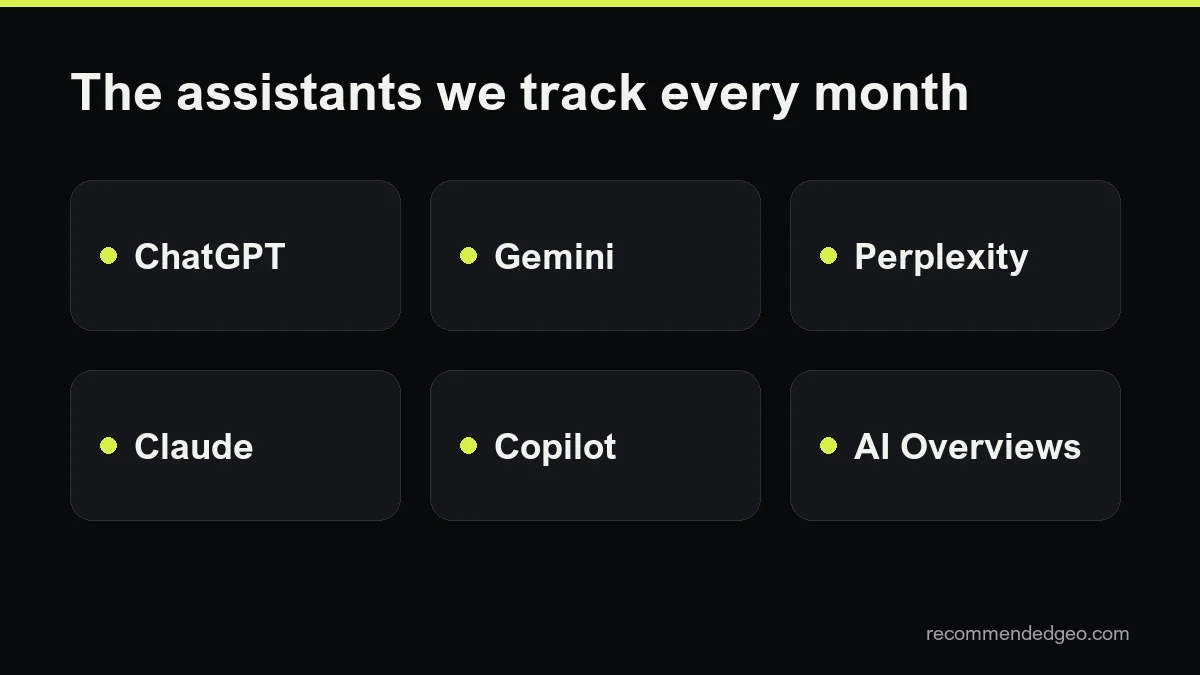
AI SEO, in this guide, means optimizing your site for search engines that generate answers: Google AI Overviews and AI Mode, ChatGPT search, Perplexity and Copilot. It does not mean using AI tools to write or audit your SEO. Below: what changes when the result is an answer, which classic foundations still decide whether you get retrieved, what is genuinely new, and a checklist in the order we would work through it.
What AI SEO means here, and what it does not
The phrase AI SEO is used for two different things. Some people mean SEO done with AI tools: drafting articles with a model, clustering keywords, automating audits. Others mean SEO for AI search: making pages that answer engines can find, read and cite.
This article is about the second meaning. Using AI tools can speed up parts of the work, but it does not change what a search engine needs from your site. That is the subject here.
It is also a practical guide, not a comparison. If you want to understand how a GEO agency differs from an SEO agency, read GEO vs SEO or GEO agency vs SEO agency. Here we stay with the question of what to do on your site and around it.
How search changes when the result is an answer
In a classic results page, you compete for one of ten blue links and the user decides which to open. In an AI answer, a system reads several sources first, writes a summary and then shows a few links as support. The user may never scroll to the links.
Three consequences follow for AI SEO:
- Being cited is the new position one. A page can be ranked, retrieved and still left out of the summary, or it can be quoted for a single paragraph.
- Questions get longer and more specific. People ask full questions, with context, and follow up in the same conversation.
- Clicks fall for simple answers and stay for decisions. A definition is answered on the spot; a comparison before a purchase still sends visits.
None of this removes the need for search engines. Every one of these products retrieves web pages before writing, and retrieval still runs on indexes, crawlers and relevance.
Where each AI search engine gets its sources
AI SEO starts with knowing which index feeds which answer. At the time of writing, the vendors document it like this:
- Google AI Overviews and AI Mode use Google's Search index. Google says a page must be indexed and eligible to show with a snippet to appear as a supporting link, and that there are no extra requirements. Source: AI features and your website.
- ChatGPT search relies on OpenAI's search crawler, OAI-SearchBot. OpenAI states that sites that opt out of it will not be shown in ChatGPT search answers.
- Perplexity indexes the web with PerplexityBot, which it describes as a search crawler and not a training crawler.
- Copilot grounds its answers in Bing. Microsoft's Bing Webmaster Tools now has an AI Performance report, in public preview, that counts citations in Copilot and Bing's AI summaries. Source: Bing Webmaster Blog.
The practical reading: Google and Bing indexing is still the base layer, and each AI crawler you block removes you from one answer engine. Our guide to robots.txt for AI bots lists every crawler name.
The classic SEO foundations that still carry AI SEO
Most of what decides whether you get retrieved is old-fashioned SEO. Google's own advice for its AI features reads like a list of fundamentals, and its May 2025 post on succeeding in AI search says that meeting the technical requirements covers you for AI formats too.
- Indexing in Google and Bing. Verify both properties, submit sitemaps and fix pages excluded by mistake. If a page is not indexed, it cannot be cited in AI Overviews or Copilot.
- Crawlability. Allow Googlebot, Bingbot and the AI search crawlers in robots.txt, and check your CDN or firewall does not block them silently.
- Content in text. Important information should be in the HTML as text, not only inside images, PDFs or scripts that render late.
- Page quality. Unique, useful content written for people, with a clear main content area and a fast, stable page.
- Internal links. Google lists findability through internal links as a best practice. Pages with no links pointing to them are discovered late or not at all.
- Structured data that matches the page. Schema helps machines understand entities, but Google asks that markup describe content users can actually see.
If these basics are broken, nothing more advanced will compensate. A good AI SEO audit therefore starts where a technical SEO audit starts.
What is new: passages, fan-out, mentions and measurement
Four things work differently enough to change how you plan content.
Passages over pages. Answer engines quote and cite specific sections. A page can rank well and never be used because the answer is buried in paragraph nine. Write sections that make sense on their own, with the answer near the start. Bing's AI Performance guidance also points to clear headings, tables and FAQ sections. We cover the technique in how to write content AI cites.
Query fan-out. Google describes AI Overviews and AI Mode as issuing multiple related searches across subtopics to build one response. One question becomes several retrievals, so the page that gets cited may be the one that answers a sub-question well, not the one targeting the main keyword. Covering a topic's sub-questions, each in its own section or page, matters more than repeating a head term.
Mentions on third-party sites. Assistants form a view of brands from what others write: reviews, comparisons, forums, best-of lists. Being described consistently on sites you do not own is part of AI SEO in a way that unlinked mentions never were in classic SEO. See brand mentions for AI and best-of lists.
Measurement beyond clicks. Google reports AI feature traffic inside the Search Console Performance report under the Web search type, with no separate filter. ChatGPT adds utm_source=chatgpt.com to referral links, and Bing's report counts citations but not clicks. You need to measure whether you are mentioned and cited, not only visits.
An AI SEO checklist in priority order
This is the order we follow on a new site. Each step depends on the one before it.
- Confirm indexing in Google Search Console and Bing Webmaster Tools. Fix exclusions on the pages you want cited.
- Audit crawler access: robots.txt, CDN and WAF rules for Googlebot, Bingbot, OAI-SearchBot, PerplexityBot and Claude-SearchBot. Check server logs for 200 responses.
- Check snippet controls. A stray nosnippet or a very low max-snippet limits how Google can show your content, including in AI features.
- List the real questions buyers ask an assistant about your category. Our prompt research guide explains how.
- Map each question to one page and one section that answers it in the first two sentences.
- Strengthen internal links from your strongest pages to those answer pages.
- Add or correct structured data so it matches what is visible on each page.
- Update key pages when facts change, and show the date. Bing recommends IndexNow to notify it of new or changed URLs.
- Work on third-party presence: reviews, directories, comparison articles and communities where your category is discussed.
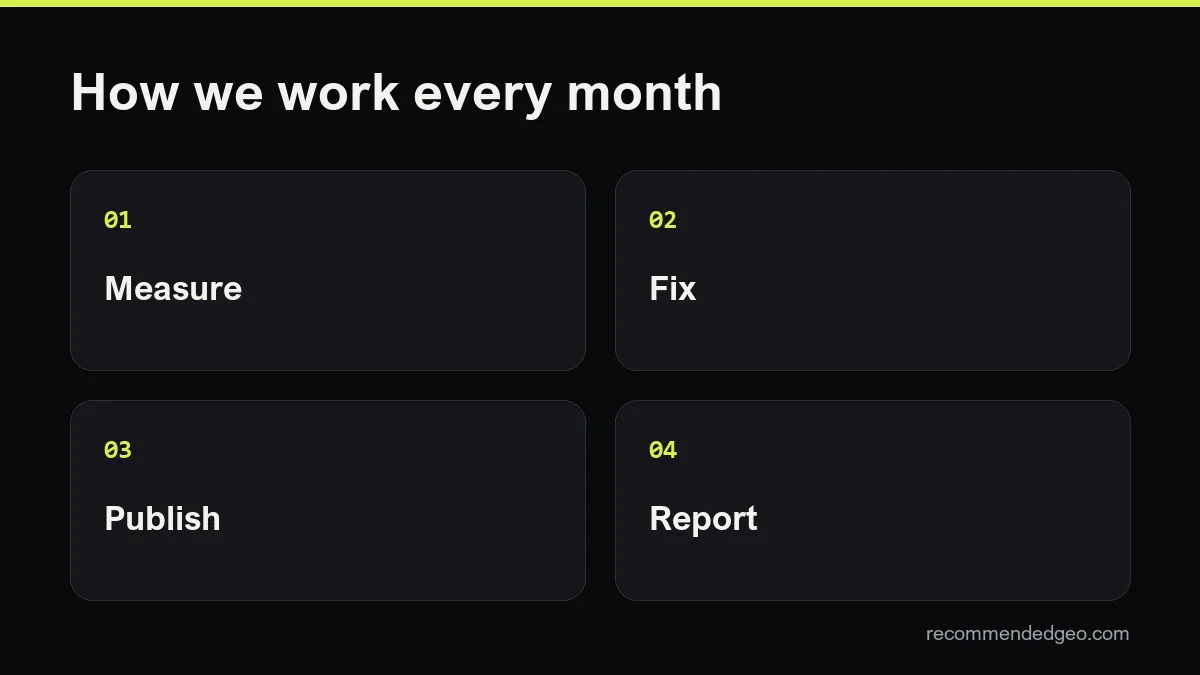
- Measure every month: run your question list in each assistant, record mentions and citations, and segment AI referrals in analytics.
What to stop doing
Some habits waste time in AI search, and a few actively hurt.
- Stop writing one thin page per keyword variant. Fan-out rewards coverage of sub-questions, not near-duplicates.
- Stop hiding the answer under long introductions. If the first screen does not answer the question, the passage is weaker.
- Stop adding schema for content that is not on the page. It breaks Google's guidelines and adds nothing an assistant can quote.
- Stop treating llms.txt or special AI files as a shortcut. Google says no new machine-readable files are needed for its AI features; llms.txt is optional elsewhere.
- Stop blocking AI search crawlers by default to protect content you actually want customers to find.
- Stop judging success by clicks alone. A brand recommended in an answer may get the visit later, from a direct or branded search.
How AI SEO fits with GEO
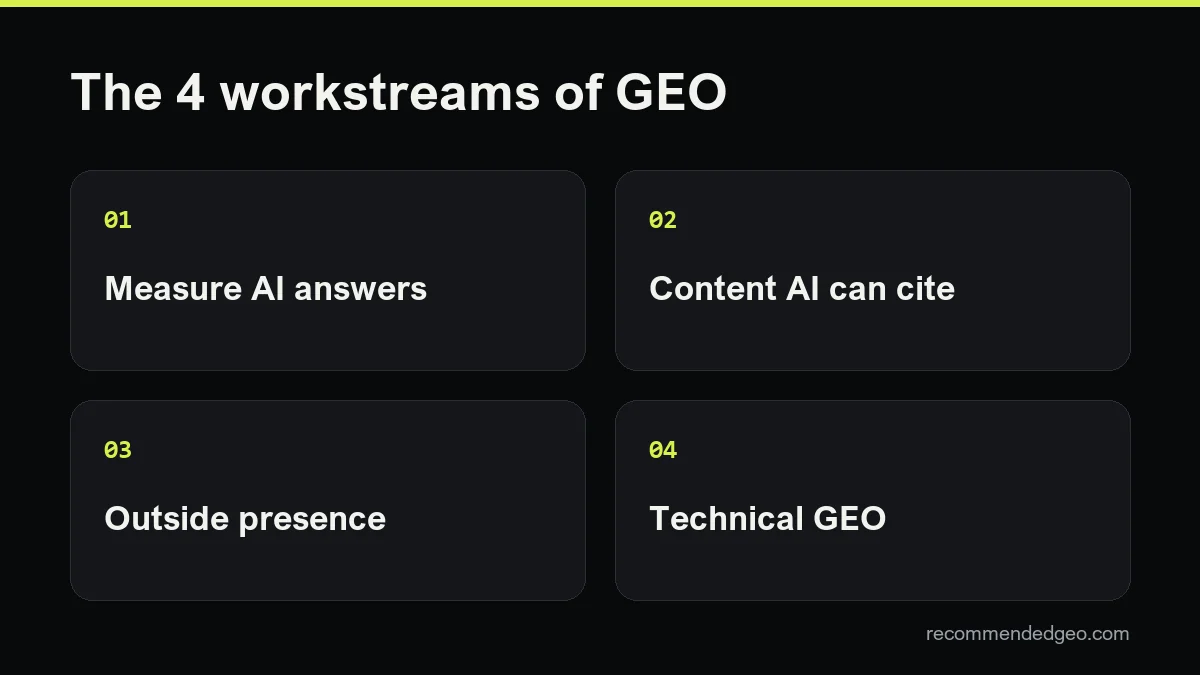
AI SEO and generative engine optimization overlap heavily. In our usage, AI SEO is the on-site and technical side: indexing, access, page structure, schema. GEO adds what happens off your site and the question-by-question measurement across assistants.
If you want the strategic view, read GEO strategy. If your main concern is Google, our guides to appearing in AI Overviews and Google AI Mode go deeper. For measurement, see how to measure AI visibility.
A fictional example of the order of work: a regional accounting firm finds that Bing has indexed only half its service pages, and its CDN returns 403 to PerplexityBot. Fixing those two issues comes before rewriting a single paragraph, because no rewrite can be cited from a page the engines cannot reach.
Frequently asked questions
Is AI SEO different from regular SEO?
Mostly it builds on it. Indexing, crawlability, page quality, internal links and accurate structured data still decide whether you are retrieved. What changes is that answers cite passages, run several sub-searches per question and draw on third-party mentions, so content structure and off-site presence weigh more.
Do I need special markup or files for Google AI Overviews?
No. Google says there are no additional requirements and no special schema or AI text files needed for AI Overviews or AI Mode. The page must be indexed and eligible to show with a snippet.
How do I see AI SEO results in my data?
Google includes AI feature traffic in Search Console's Web search type, without a separate filter. Bing Webmaster Tools reports Copilot citations in its AI Performance report. ChatGPT referrals carry utm_source=chatgpt.com. For mentions without clicks, you have to run your questions in each assistant and record the answers.
Does blocking AI crawlers affect AI SEO?
Yes, if you block search crawlers. Blocking OAI-SearchBot removes you from ChatGPT search answers, and blocking Bingbot or Googlebot removes you from Copilot or Google's AI features. Blocking training-only crawlers such as GPTBot does not have that effect.
How long until AI SEO changes show up?
Technical fixes can show within days once pages are recrawled. Content and third-party mentions usually take weeks to months to change how assistants describe you, which is why we measure monthly.