Guide · 9 min read
AEO vs GEO: where each term came from and what actually differs
AEO vs GEO is mostly a debate about names. Answer engine optimization grew up with featured snippets and voice search; generative engine optimization was named in a 2023 research paper about answers written by AI. This guide explains where each term came from, what LLMO, AIO and AI SEO add to the mix, where the work overlaps and what a business should do whichever label it prefers.
AEO vs GEO: the short answer
Both terms describe the same broad goal: getting your business used, cited or recommended when a machine answers a question instead of showing a list of links. The differences are mostly emphasis and age.
- AEO, answer engine optimization, is the older label. It is about a page being picked as the direct answer to a specific question.
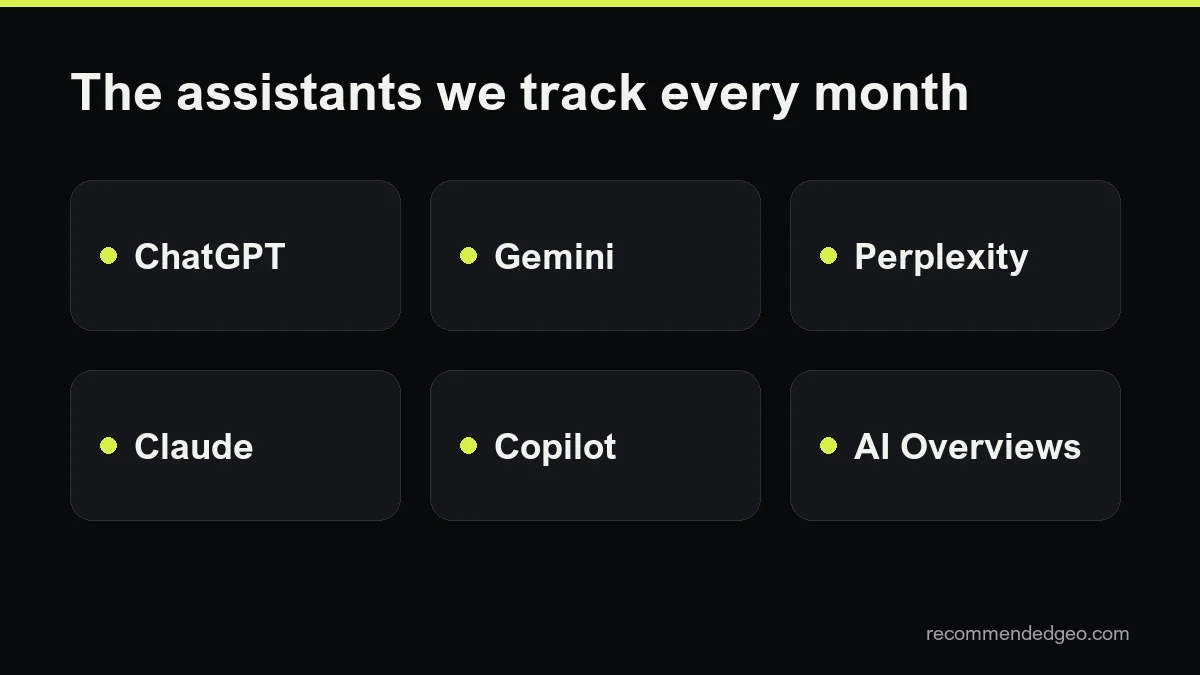
- GEO, generative engine optimization, is the newer one. It is about how AI systems that write answers from many sources, such as ChatGPT, Gemini, Perplexity, Claude, Copilot and Google's AI Overviews, see and describe your brand.
In practice the work overlaps so much that many agencies and tools use the two words as synonyms. The AEO vs GEO question matters less than whether the work in front of you covers both the page and the brand.
Where the term AEO came from
Answer engines existed before generative AI. In January 2014 Google started showing featured snippets: a box at the top of some results that quotes a passage from one page. Google's reintroduction of featured snippets, published in 2018, said they matter most on mobile and for voice, where a speaker reads one answer aloud and names the source.
That shift, from ten links to a single answer, is what answer engine optimization responded to. Site owners started asking how to win the snippet, the People also ask box and the spoken answer on a smart speaker.
Who coined the term is less clear than many articles suggest. The marketer Jason Barnard says he coined it around 2017 or 2018, and the claim is widely repeated, but we could not find an independent record that settles it. What is clear is that the idea comes from the featured snippet and voice search era, years before ChatGPT.
Where the term GEO came from
GEO has a traceable starting point. The paper GEO: Generative Engine Optimization by Pranjal Aggarwal and colleagues was posted on arXiv in November 2023 and accepted at KDD 2024. The authors used the term for helping content creators improve how visible their content is inside answers written by generative engines.
They built a benchmark of queries across several domains, tested ways of rewriting source pages and reported that some methods raised visibility in generated answers by up to 40%, with results that varied by domain. That figure comes from a controlled experiment, so it shows that content changes can matter without predicting what will happen on your site.
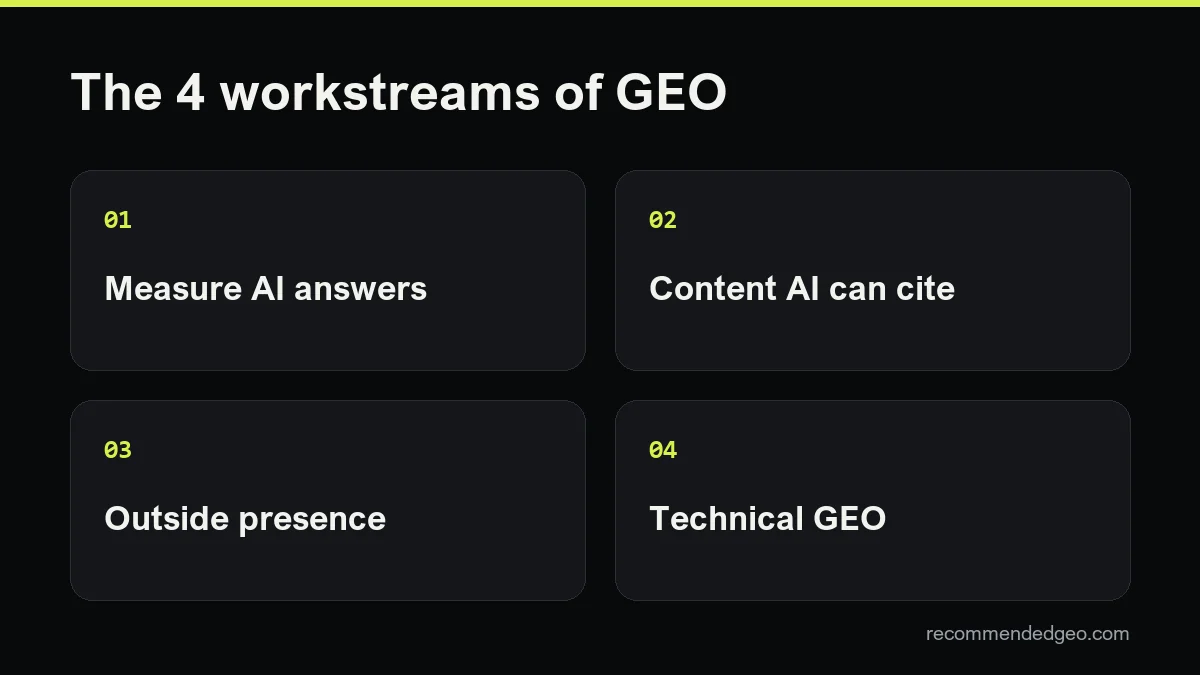
After the paper, agencies and tool vendors adopted the term quickly, and its meaning widened. Today GEO usually also covers off-site signals: reviews, directories, comparisons and press that assistants read before they recommend a brand.
LLMO, AIO and AI SEO: the other labels
Three more names show up in proposals and job titles. None of them has an official definition.
- LLMO, large language model optimization. Agencies and vendors use it as a near-synonym of GEO, with more weight on how models describe an entity. We found no academic paper or standards body behind it.
- AIO, usually AI optimization. Watch out: many people also write AIO as short for Google's AI Overviews, so the same three letters can name a discipline or a search feature.
- AI SEO. The broadest and plainest label: SEO adapted to search results that include AI answers. It has its own guide on AI SEO.
When someone uses any of these terms, ask what work they mean. The answer tells you far more than the acronym.
What each label emphasises
Set the labels side by side and each one puts the spotlight somewhere slightly different:
- AEO puts the question and the passage first: a clear answer, near the top, in a format a machine can lift without rewriting.
- GEO puts the brand and the generated answer first: whether assistants know who you are, trust the facts about you and include you when someone asks for options.
- LLMO puts the model first: what a language model has learned or retrieves about your company.
- AI SEO puts continuity first: the same discipline as before, with new surfaces to track.
These are differences of emphasis. None of them comes with its own rulebook from Google, OpenAI or any other vendor.
Where AEO and GEO overlap
Most of the practical work belongs to both camps:
- Pages that answer real questions directly, with the answer in the first lines of the section.
- Clear structure: one topic per page, descriptive headings, short paragraphs, and lists or tables where they help.
- Structured data that describes what is actually visible on the page.
- Consistent facts about prices, locations, services and specs across your site and third-party profiles.
- Technical access, so crawlers can reach and read your pages.
Google's own guidance points the same way. Its page on AI features and your website says there are no additional requirements or special optimizations needed to appear in AI Overviews or AI Mode, and that SEO best practices remain relevant.
AEO vs GEO side by side
A comparison in four points. It reflects how the terms are usually used; nobody has fixed definitions.
- Goal. AEO: be the source of the direct answer to a specific question. GEO: be mentioned, cited and recommended in answers that AI assistants write.
- Where it shows. AEO: featured snippets, People also ask, voice assistants and the cited sources in AI Overviews. GEO: ChatGPT, Gemini, Perplexity, Claude, Copilot, Google AI Overviews and AI Mode.
- Main levers. AEO: page format, direct answers, FAQ content, headings and structured data. GEO: all of that, plus brand facts, reviews, mentions in comparisons and lists, directories and press.
- How to measure. AEO: snippet and AI Overview presence for a set of queries, mostly in Google. GEO: a fixed set of buyer questions run in several assistants over time, recording whether you are named, how, next to whom and with which sources.
The AEO vs GEO comparison shows one practical difference that is real: measurement. Snippets are fairly stable and easy to see in Google. Generated answers change between runs and between assistants, so they need repeated tracking, which we explain in how to measure AI visibility.
Why the labels matter less than the work
Acronyms help sell services and name job roles. They do not change how the systems work. An assistant does not check whether your agency calls itself AEO or GEO before it decides which sources to use.
The AEO vs GEO debate can also hide gaps. A provider that only formats pages may leave out the off-site presence that drives recommendations. A provider that only talks about brand mentions may ignore pages that never answer the question a buyer actually asks.
A useful test: ask any provider which questions they will track, in which assistants, which pages and outside sources they will work on, and how they will report it. If the answers are clear, the label hardly matters.
What a business should actually do
Whichever side of the AEO vs GEO debate a provider takes, the steps are the same:
- List the questions your buyers ask before they choose a provider. Start from sales calls and support tickets, then check them with prompt research.
- Run those questions in the assistants your buyers use and note who gets named today and which sources are cited.
- Make sure crawlers can read your site and that your key facts match everywhere they appear.
- Rewrite key pages so each one answers its question in the first lines. Our guide on how to write content AI cites covers the format.
- Work on the outside sources assistants rely on: reviews, directories, comparisons and best-of lists in your sector. See brand mentions for AI.
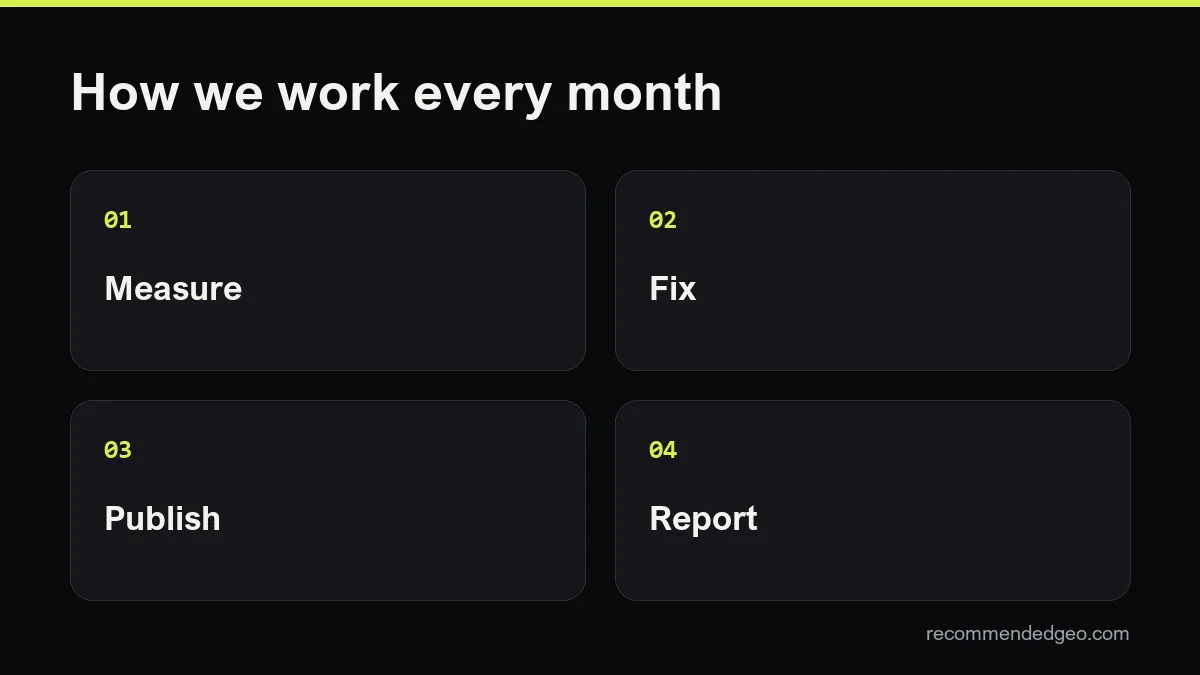
- Track the same questions every month and judge the trend over several months, not a single run.
If you want these steps as a plan with priorities, our GEO strategy guide puts them in order.
How we use the terms at RecommendedGEO
We use GEO as the umbrella and treat AEO as one part of it: the page-level answer work. That is why we do not sell AEO separately. It is included in every plan, as described on our AEO agency page, and the wider background is in what GEO is.
Our plans are Starter at $449 a month, Growth at $899 and Scale at $1,699, each with a three-month minimum. The main difference is how many buyer questions we track every month: 30, 80 or 200.
Frequently asked questions
Is AEO the same as GEO?
They overlap heavily and many people use them as synonyms. When they are separated, AEO focuses on a page being chosen as the direct answer, while GEO also covers how AI assistants describe and recommend the brand as a whole.
Who came up with the term GEO?
It was introduced in the paper GEO: Generative Engine Optimization by Aggarwal and colleagues, posted on arXiv in November 2023 and accepted at the KDD 2024 conference.
Is AEO outdated now that AI assistants exist?
No. Featured snippets and AI Overviews still take passages from pages, and clear direct answers help in chat assistants too. AEO is best seen as one part of the wider work.
Do I need separate AEO and GEO agencies?
Usually not. In the AEO vs GEO split, the work overlaps so much that splitting it tends to create duplicated effort and reports that contradict each other. Ask one provider to cover both page answers and off-site presence.
What does AIO mean?
It depends on who writes it. Some people mean AI optimization, a general label close to GEO; others use AIO as short for Google's AI Overviews. Ask which one they mean before comparing proposals.