Guide · 10 min read
How to get mentioned by Claude: search, crawlers and what helps
If you are working out how to get mentioned by Claude, start with one fact: Claude can talk about your brand from two different places. One is what the model learned during training. The other is what it finds on the live web while answering. This guide explains both, the three crawlers Anthropic documents, what we know about the search engine behind Claude, and the steps that make your business easier to find, read and cite.

Two ways Claude can know about your brand
Claude is a language model made by Anthropic. When someone asks it for a recommendation, the answer can come from its built-in knowledge, from a web search it runs during the conversation, or from a mix of both.
- Training data. Before a model is released, it learns from a large body of text, including public web pages. What it absorbed stays fixed until the next model. If your brand was rarely written about before that cutoff, the model may know little or nothing about it.
- Live search and fetch. With web search, Claude looks things up while answering and cites the pages it used. It can also read a specific URL when a user pastes one. This is the part you can influence within weeks rather than model generations.
Most of the work on how to get mentioned by Claude focuses on the second route, while slowly building the kind of presence that feeds the first. Both depend on the same thing: clear, accessible, consistent information about you across the web.
Training data: what you can and cannot change
Anthropic says ClaudeBot collects web content that could contribute to model training. You cannot edit what an existing model already knows, and there is no form to submit your company to a future model.
What you can do is make sure the public record about you is accurate and plentiful by the time the next training run collects it. That record includes your own site, but also press coverage, directories, reviews, forums and reference sites that mention you.
Blocking ClaudeBot in robots.txt signals that your future pages should be excluded from training datasets. Anthropic also says it now recognises, in a gradual rollout, a machine-readable no-AI-training preference based on an IETF draft, and that rules naming ClaudeBot take priority over that general signal. Whether to opt out of training is a business decision; just know it can reduce how much future models learn about you from your own pages.
When Claude decides to search the web
Claude does not search for every question. Anthropic's web search tool documentation says it searches when a request depends on information that is current, changing or outside its training data. The examples include recent news, current prices and information about specific organisations, people or products that might have changed.
For stable knowledge, coding concepts or creative writing, it tends to answer directly. That matters for brands. A question like which accounting software suits a small agency, or which hotel near a given beach has parking, is exactly the kind of request where Claude is likely to look things up.
When it searches, Claude may run several queries in one answer and shows citations for the sources it used. In the Claude apps, Team and Enterprise workspaces need an owner to enable web search first, and at the time of writing the newer Claude experience decides on its own when searching helps. So two people asking the same question may get different answers depending on plan and settings.
Which search engine Claude uses
Anthropic does not publish how Claude picks or ranks search results, so be wary of anyone who claims to know the exact formula. What is documented is the list of vendors it uses.
When web search launched in March 2025, Anthropic added Brave Search to its public list of subprocessors, and independent testers found Claude's citations matching Brave's results for the same query. Anthropic's help center states that image search in Claude is powered by Bing.
Two cautions. First, vendor lists change; check the subprocessor list in Anthropic's Trust Center if this detail matters to you. Second, Anthropic also runs its own Claude-SearchBot to index pages for search quality. In practice, being indexed by Brave and being reachable by Anthropic's crawlers both help, and neither replaces strong content.
ClaudeBot, Claude-SearchBot and Claude-User
Anthropic documents three bots in its help article Does Anthropic crawl data from the web. Each has a different job, and blocking each one has a different cost.
- ClaudeBot collects content that could be used to train models. Blocking it affects future training, not today's search answers.
- Claude-SearchBot analyses pages to improve the relevance and accuracy of search responses. Anthropic says blocking it may reduce your visibility and accuracy in user search results.
- Claude-User fetches pages when a person asks Claude a question that needs them. Blocking it stops Claude from retrieving your content for those requests.
Anthropic says its bots respect robots.txt, support the non-standard Crawl-delay directive and do not bypass CAPTCHAs. It also warns that blocking its IP addresses may not work reliably, and can stop it from reading your robots.txt at all. Rules apply per subdomain, so repeat them on each one you care about. Our guide to robots.txt for AI bots has files you can copy.
One frequent problem sits outside robots.txt: a CDN or firewall that answers AI crawlers with a challenge page or a 403 error. Check your server logs for Claude-SearchBot and Claude-User and confirm they receive normal 200 responses.
How to get mentioned by Claude in seven steps
These steps summarise how to get mentioned by Claude without shortcuts. None of them guarantees a mention. Nobody outside Anthropic controls Claude's answers, and Anthropic says Claude's responses will not be influenced by advertisers. These are the steps that make you easy to find and safe to cite.
- Let the right crawlers in. Allow Claude-SearchBot and Claude-User, and decide deliberately about ClaudeBot. Then check the CDN and firewall, not only robots.txt.
- Make pages readable without JavaScript. If your key facts only appear after scripts run, some crawlers may see an empty page. See JavaScript and AI crawlers.
- Answer the questions buyers actually ask. Build pages around real questions: who the service is for, what it costs, how it compares, where you operate. Start from prompt research, not from a keyword list.
- State facts plainly and keep them current. Prices, locations, opening hours, product names, founding year, team size. Claude's search results carry a page age, so dated or contradictory information is a weak source.
- Be indexed by the search engines Claude relies on. Check that your important pages appear in Brave Search, and keep your site healthy in Google and Bing, because the same pages feed many assistants.
- Earn mentions on other sites. Claude often cites third-party pages: comparisons, reviews, directories, news and forums. A brand that only describes itself on its own site is harder to recommend.
- Measure with a fixed set of questions. Ask the same prompts regularly and record whether you are named, how you are described and which sources are cited.
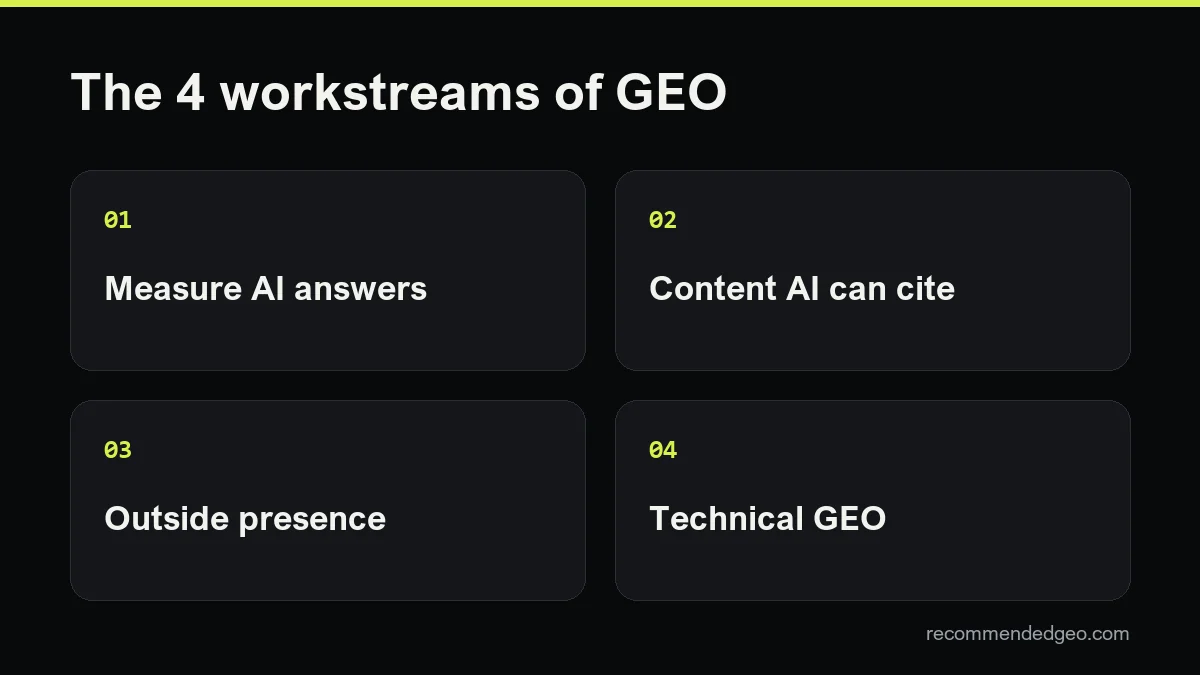
Content Claude can cite
When Claude reads a page during a search, it looks for passages that answer the question. Pages that bury the answer under long introductions or vague marketing are harder to quote.
- Put the direct answer near the top of each section, then the detail.
- Use headings that match questions, such as how much it costs or who it is for.
- Include specifics a model can repeat with confidence: numbers, names, conditions, dates.
- Publish honest comparison pages, including where a competitor fits better. They tend to be cited because they answer the comparison people ask for.
- Keep one clear page per topic instead of several thin pages saying the same thing.
We cover the writing side in more depth in how to write content AI cites, and the broader mechanics in how AI search works.
Mentions outside your own website
For recommendation questions, assistants tend to lean on sources that compare several options. If those pages do not include you, Claude has less reason to name you, however good your site is.
The sources worth working on depend on your sector, but common ones are independent best-of lists, review platforms, industry directories, trade press and community discussions. Our guides on brand mentions for AI, best-of lists and Reddit for AI search go through each one.
Consistency matters as much as volume. If your name, category or prices differ between sites, a model has to guess which version is right, and it may describe you inaccurately or leave you out.
How to check whether Claude mentions you
The last part of how to get mentioned by Claude is checking the result. There is no Claude dashboard for brands at the time of writing, so checking is manual or done with a monitoring tool. A simple routine works:
- Write 20 to 30 questions a real customer would ask, in their language and with their location if it matters.
- Ask each one in Claude with web search available, and note whether it searched, whether you were named and which pages it cited.
- Ask a few again in a fresh chat. Answers vary between runs, so one test proves little.
- Look at the cited sources. If competitors appear through a particular list or review site, that is your next target.
- Check your logs for Claude-User visits. They show which of your pages Claude actually fetched for users.
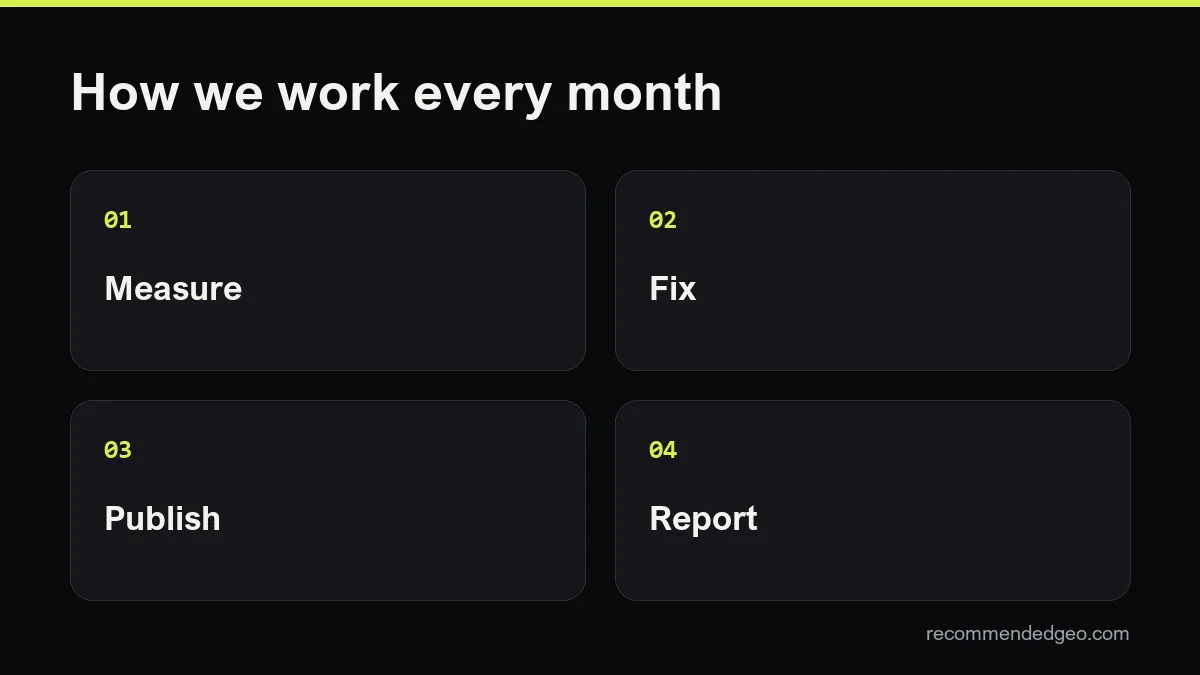
- Repeat monthly and compare. We explain the method in how to measure AI visibility.
What does not help
- Paying for placement. Anthropic has said Claude will remain ad-free and that advertisers will not influence responses, in its post Claude is a space to think.
- Hidden text or instructions aimed at AI models. Pages that try to manipulate assistants risk being treated as unreliable.
- Mass-produced pages that repeat your brand name. They add volume without adding facts anyone would cite.
- Expecting overnight results from training data. Changes there take a new model release; search visibility moves faster.
If you want the full picture across assistants, the same principles apply to ChatGPT, covered in how to get recommended by ChatGPT. A free GEO audit is a quick way to see where you stand today.
Frequently asked questions
Can I pay Anthropic to have Claude recommend my brand?
No. Anthropic has stated that Claude will stay ad-free and that advertisers will not influence its responses. The route to a mention is being findable and well described across trustworthy sources.
Does blocking ClaudeBot remove me from Claude's answers?
Not directly. ClaudeBot relates to training. Search answers depend on Claude-SearchBot and Claude-User, which you control separately. Blocking those is what reduces your visibility in Claude's search results.
Does Claude use Google to search?
Anthropic lists Brave Search as a web search subprocessor, and its help center says image search is powered by Bing. Anthropic does not document a Google dependency for Claude's web search. Vendor details can change, so check Anthropic's current subprocessor list.
How long does it take to appear in Claude?
For search-based answers, changes can show within weeks once pages are crawled and indexed. For the model's built-in knowledge, you have to wait for a future model trained after your presence grew. Knowing how to get mentioned by Claude is mostly about the first route.
Why does Claude mention a competitor and not us?
Look at the pages it cites in that answer. Usually the competitor appears in a comparison, review site or directory where you are missing, or its pages state the relevant facts more clearly.