Industry · 8 min read
GEO for ecommerce: get AI assistants to recommend your products
More shoppers now ask an AI assistant what to buy before they open a search engine. GEO for ecommerce is the work of preparing your catalog, product pages and reputation so that ChatGPT, Google AI Mode, Perplexity and the rest can find your products, understand them and suggest them. This page covers how those assistants choose, which sources they lean on in your market, and what we do inside our plans.
How shoppers ask AI for product recommendations
Product search is no longer a few keywords. In an assistant, people describe their situation in full sentences and expect a short list back. A few made-up examples of the kind of question we track:
- "What's a good bean-to-cup coffee machine under $400 for two people?"
- "Running shoes for wide feet on pavement, which ones are worth it?"
- "Is store X reliable for buying a laptop? What are their returns like?"
- "Compare brand A and brand B for a carry-on that fits under the seat."
These answers have few slots: three to five products, sometimes with one merchant highlighted. That is why GEO for ecommerce is less about ranking on a long results page and more about being one of the few options an assistant feels safe recommending.
Where products appear: ChatGPT, Google and Perplexity
Each platform works differently and changes often. Here is what matters, based on their own documentation at the time of writing:
- ChatGPT shows product cards with prices and a list of merchants when a question has buying intent. OpenAI says it ranks merchants on availability, price, merchant quality and whether the seller is the maker or primary seller, and that purchases are completed on your own site. Our ChatGPT Shopping guide covers feeds, country limits and checks in detail, and it is the best place to start if you sell online.
- Google uses product data from Merchant Center and from your pages across its shopping experiences, including Google AI Mode and AI Overviews. In May 2026 it announced AI performance insights in Merchant Center, planned first for the US, Canada, Australia, India and New Zealand.
- Perplexity shows product cards next to its answers and runs a merchant program that started in the US. Its shopping announcement says detailed product information from merchants helps it judge whether a product is relevant.
Many shopping features launch in the US first and reach the UK, Canada or Australia later, or in a different form. Your product pages, structured data and reputation are read everywhere, though, and they are ready when a feature opens in your market.
The sources assistants lean on
When an assistant explains why it recommends a product, it usually leans on what others say about it. In ecommerce these sources carry the most weight, and the mix varies by country:
- Marketplaces: Amazon everywhere, plus Walmart, eBay and Etsy in the US and Argos or John Lewis in the UK. Their listing and price compete with your own store.
- Review platforms: Trustpilot, which matters a lot in the UK, verified reviews on your own store, and the reviews inside marketplaces.
- Comparison sites and editorial: price comparison sites, specialist magazines, product reviews and best-of lists for your category. See our guide on getting into best-of lists.
- Communities: forums, Reddit and video reviews, where buyers discuss flaws and alternatives.
You don't need to be everywhere. We measure which sources assistants cite for your questions and prioritize the ones that actually show up. The method is in brand mentions for AI.
Technical priorities in GEO for ecommerce: feeds and schema
The technical side of GEO for ecommerce has one simple goal: any system should be able to read, without doubt, what you sell, at what price, with what stock and on what terms.
- Crawler access: make sure robots.txt and your CDN don't block OAI-SearchBot, Googlebot, Bingbot or PerplexityBot. There are examples in our robots.txt guide for AI bots.
- Product markup with Offer on every product page: name, image, brand, GTIN or MPN if you have one, price, currency and availability. Google lists the properties for merchant listings, including return policy and shipping.
- Review and AggregateRating only for real reviews of that product shown on the page, never your overall store rating.
- A clean product feed in Merchant Center and, where your platform supports it, in the AI channels as they open. Google says using both a feed and markup maximizes eligibility.
- The same price and availability on the page, in the markup and in the feed. If a marketplace sells your product cheaper, it can take the top merchant slot.
Pages worth creating or improving
Assistants recommend what they can justify. A product page with three lines of manufacturer copy leaves little to cite. These pages take the most work and pay back the most:
- Product pages that answer questions: who it's for, what it can't do, sizes, compatibility, delivery times and returns, written in sentences and not only in a spec table.
- Category pages with a useful introduction on how to choose within that product family.
- Buying guides and honest comparisons between your own products or against common alternatives.
- Trust pages: who you are, warranty, returns, customer service and company details that match across the site.
How to write that content so it can be extracted and quoted is covered on our AEO agency page.
Risks and rules to keep in mind
This is general information, not legal advice. Still, some rules in online retail affect GEO work directly:
- Reviews: in the US, the FTC's rule on fake reviews prohibits buying or faking them, and the UK banned fake reviews under its consumer protection law from April 2025. If you sell into the EU, the Omnibus rules also require you to say whether you check that reviews come from real buyers.
- Pricing and discounts: "was" prices and sale claims are regulated in most markets. A confusing discount in your feed confuses assistants too.
- Regulated products: food supplements, cosmetics, health products and children's products have their own rules on what you can claim.
We never buy reviews or publish invented testimonials. Beyond the legal risk, it is exactly the kind of signal platforms try to filter out.
What we do each month and which plan fits
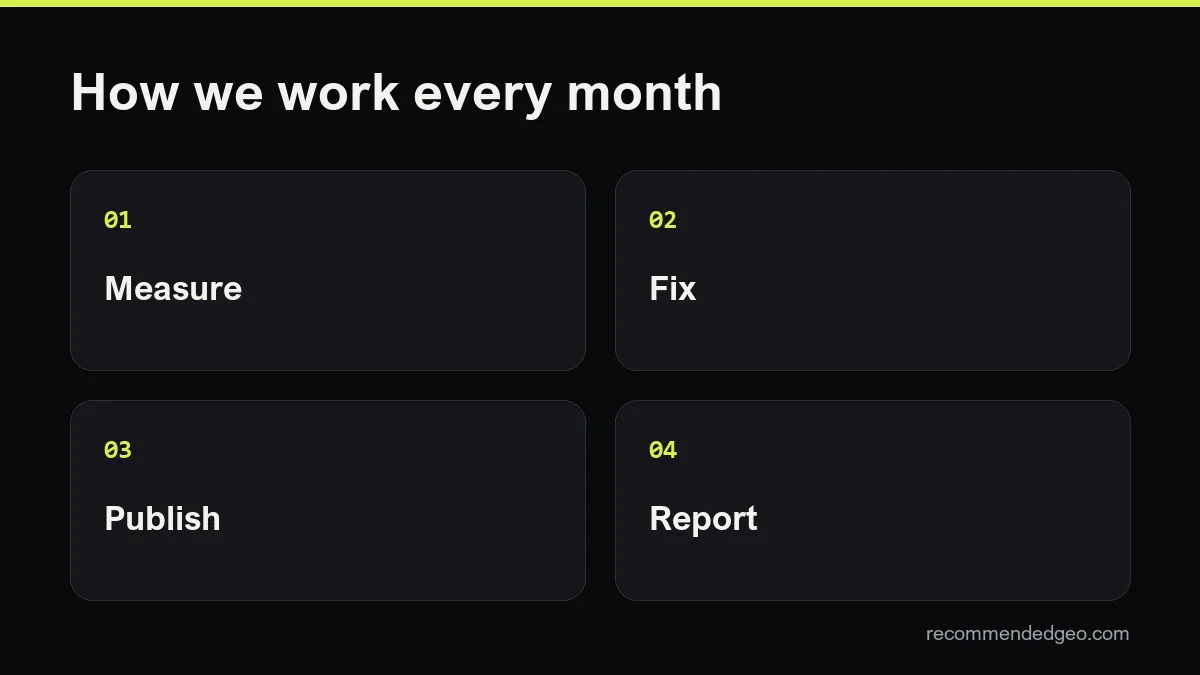
GEO for ecommerce is included in our monthly plans. A typical month looks like this:
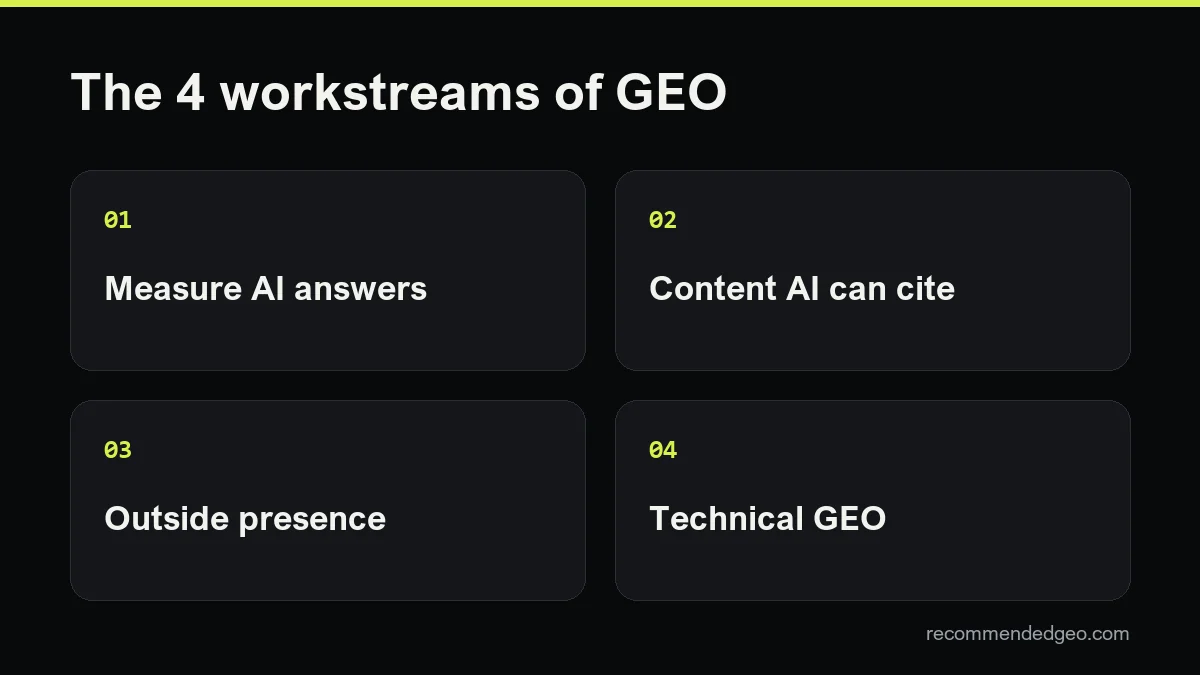
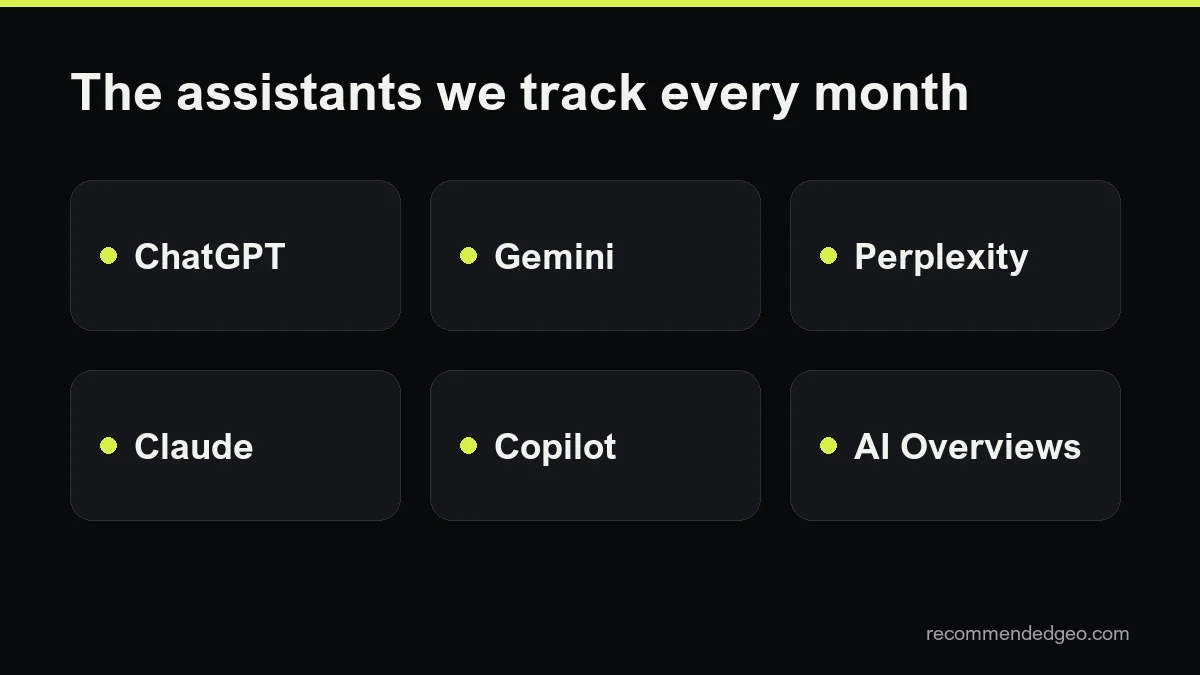
- Measurement: we run your buyers' shopping questions in ChatGPT, Gemini, Perplexity, Claude, Copilot and AI Overviews and show you the real answers, including which products and merchants appear.
- Technical review: crawlers, product markup, and consistency between feed, page and visible price.
- Content: we improve product pages, categories or buying guides, depending on the plan's volume.
- Outside presence (Growth and Scale): comparison sites, trade media and review platforms where it makes sense to be.
- A report on what changed and what comes next, using the method in how to measure AI visibility.
The three plans, with published prices:
- Starter, $449 per month: 30 questions tracked and 2 pages or articles optimized per month, ongoing technical GEO and a monthly report. A fit for small or niche stores with a few categories.
- Growth, $899 per month: 80 questions tracked, 5 pages or articles and 2 outside-presence actions per month, a report every two weeks and a monthly call. This is the usual fit for a store with several categories and marketplace competition.
- Scale, $1,699 per month: 200 questions tracked, 10 pages or articles and 5 outside-presence actions per month, a weekly report and a dedicated strategist. Built for large catalogs or several countries.
Every plan has a three-month minimum, then you can cancel whenever you like. Full details are on pricing.
How we start with your store
The first step is the free GEO audit. We check whether AI crawlers can reach your store, how your product markup looks and what assistants answer to a handful of shopping questions in your category. From that we tell you what we would fix first and which plan makes sense, with no commitment.
What we don't do is promise results. No assistant publishes how it chooses recommendations, and answers change from day to day. What GEO for ecommerce does is make your store a clear, trustworthy option and measure every month whether it shows up.
Frequently asked questions
How is GEO for ecommerce different from my store's SEO?
SEO aims for positions in Google's list of results. GEO for ecommerce aims to get assistants to mention and recommend your products in their answers. They share a technical base, but GEO measures different things and gives more weight to reviews, comparisons and marketplaces.
Do I have to pay to appear in ChatGPT Shopping?
No. OpenAI says product results are not ads. Our ChatGPT Shopping guide explains which data it uses and how to check whether you appear.
I sell on Shopify or WooCommerce. Does this still apply?
Yes. The platform changes how your feed and markup are generated, not the approach. We review what your theme and apps publish and fix what is missing or inconsistent.
Most of my sales are on Amazon. Is this still worth it?
Yes, but the work shifts: we look after the marketplace listing, price consistency and making clear on your site that you are the maker or primary seller, which OpenAI lists as a factor.
When do changes show?
The first changes usually appear between the second and fourth month, depending on category and competition. That is why the minimum is three months.