Industry · 8 min read
B2B GEO: get on the shortlist AI assistants build for buyers
B2B GEO is the work of getting your company named when a buyer asks an AI assistant who belongs on a shortlist. This page explains what those questions look like, which sources assistants tend to lean on in B2B markets, what your own site needs, and what we do month by month inside our plans.
How B2B buyers use AI assistants to build a shortlist
A procurement manager, an operations director or a founder rarely asks an assistant to buy anything. They ask it to narrow the field. Before the first sales call, a growing number of buyers use ChatGPT, Gemini, Perplexity, Claude, Copilot or Google's AI Overviews to get a first list of vendors, compare two of them or check whether a supplier looks credible.
The questions tend to be specific. These are illustrative examples, not data from any client:
- Which ERP integrators in the Netherlands have experience with food manufacturers?
- Shortlist five contract packaging companies in Germany that handle pharmaceutical products.
- Compare logistics software for mid-sized distributors: pricing, implementation time and support.
- Is this company a reliable supplier of industrial sensors? What do customers say about it?
- Which cybersecurity firms in the UK work with law firms of under 200 people?
Two things stand out. The buyer gets a short list, not ten blue links, so being absent means missing the first round. And the questions carry constraints (country, industry, company size, certification) that a generic homepage rarely answers.
Why B2B GEO is different from consumer GEO
In consumer markets, reviews on Google, marketplaces and booking sites carry a lot of weight. In B2B the sources are fewer, more specialized and slower to change. Deals are larger, buying committees are bigger, and an assistant tends to describe a vendor using whatever detailed, citable material it can find.
- Fewer public reviews, so each review and each independent mention matters more.
- Long sales cycles: the same buyer may ask several questions over weeks, from discovery to comparison to due diligence.
- Niche vocabulary: buyers use the terms of their industry, and your pages need to use the same ones.
- Several markets at once: a supplier selling in Spain, France and Germany is described by different sources in each country.
That is why B2B GEO leans more on entity clarity and third-party evidence than on volume of content. If you sell software, many of the same ideas apply, with extra weight on software review platforms; see GEO for SaaS.
The sources assistants lean on in B2B markets
Assistants do not publish their source lists, and what they cite changes over time. When we run buyer questions in B2B categories, the answers often draw on a familiar set of source types. Which ones matter depends on your sector and country, so we verify them for each market instead of assuming.
- Industry media and trade publications: articles, supplier guides and interviews in the titles your buyers actually read.
- Analyst and research firms: reports from firms such as Gartner or Forrester in technology categories, or specialist research houses in industrial niches. You cannot buy your way into an independent report, but you can make sure analysts have accurate information about you.
- Trade associations and chambers of commerce: member directories, event listings and published supplier lists.
- B2B directories and marketplaces: Clutch for agencies, IT and software services, especially in English-speaking markets; Kompass and europages internationally; Thomasnet for industrial suppliers in North America; wlw (wer liefert was) in Germany, Austria and Switzerland. Only the ones your buyers consult are worth the effort.
- Comparison articles and best-of lists: editorial roundups of top suppliers or providers. Our guide on best-of lists explains how to approach them honestly.
- LinkedIn: your company page and the public posts of your team. Treat it as a place where your facts must match your website, not as a guaranteed source.
What your own site needs: proof, comparisons and clear facts
Third-party sources only help if your own site gives assistants something solid to confirm. For B2B companies, these are the pages we usually prioritize:
- Case studies with real data you own: the client's sector, the problem, what you did, the timeline and measurable outcomes, published with the client's permission. Vague success stories are hard for anyone to cite.
- Industry and use-case pages: one page per sector or application you genuinely serve, written in your buyers' vocabulary.
- Comparison pages: fair pages comparing your approach with the alternatives, including when you are not the right fit.
- Pricing or pricing-model pages: even if you quote per project, explain what drives the price, typical ranges where you can, minimum orders and contract terms. Buyers ask assistants about cost, and silence leaves the answer to others.
- Certifications, standards and capacity: ISO certifications, industries served, countries you deliver to and lead times, written as plain text, not only inside PDFs or images.
- An about page with leadership, registered address and years in operation.
On the technical side, add Organization markup (or a more specific subtype) with your legal name, logo, address, contact points, VAT ID where it applies and sameAs links to your official profiles. Google's Organization structured data documentation lists the recommended properties. Add Service or Product markup only where it matches the visible content.
Then keep entity data consistent: the same company name, address, founding year, sectors and headcount range on your site, LinkedIn, directories and association listings. Contradictions make it harder for an assistant to be confident about who you are.
B2B GEO rules and risks to keep in mind
This is general information, not legal advice. Check the specifics with your own advisers.
- Comparative claims: in the EU, comparative advertising is allowed only under the conditions of Directive 2006/114/EC, such as being objective and not misleading. Comparison pages should stick to verifiable facts. Other countries have their own rules.
- Client confidentiality: many B2B contracts restrict naming clients or sharing figures. Get written permission before publishing a case study, or anonymize it properly.
- Reviews: directories like Clutch have their own review policies. Asking real clients for honest reviews is fine; incentivized or fake reviews can break platform rules and the law.
- Regulated sectors: medical devices, financial services, defense or chemicals have their own rules on what you can claim in public.
None of this changes because an AI is reading the page. It only means that mistakes travel further.
What we do for B2B GEO month by month
Our B2B GEO work runs inside the same monthly plans as every other client. A typical first quarter looks like this:
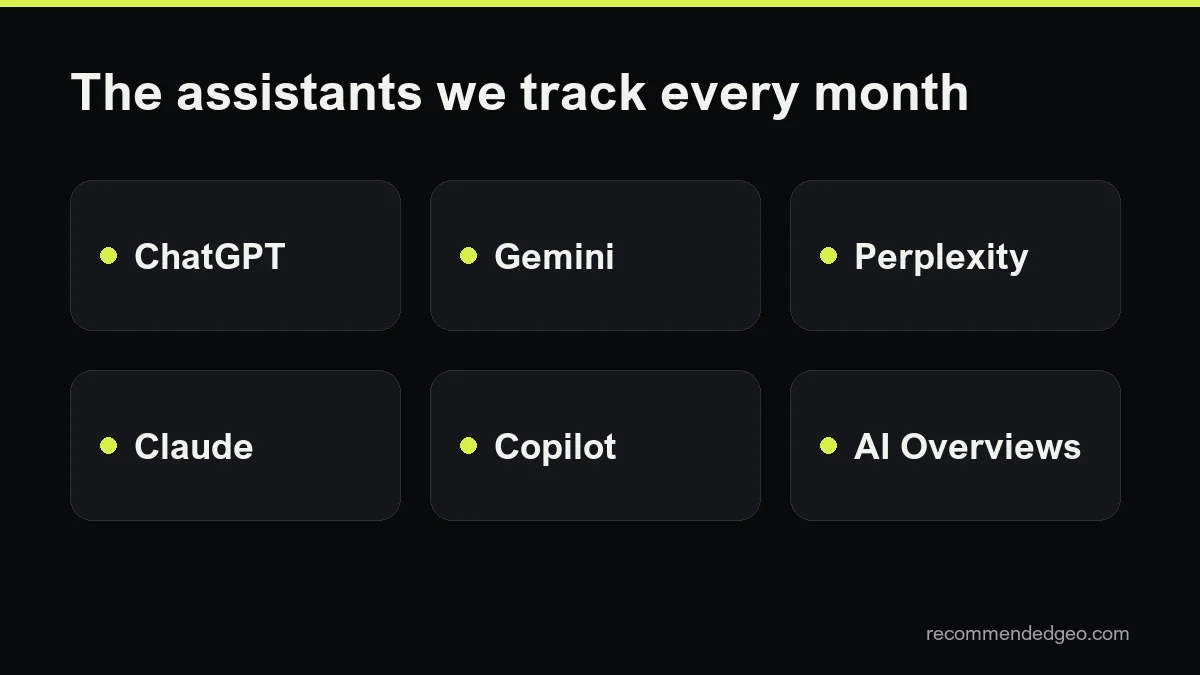
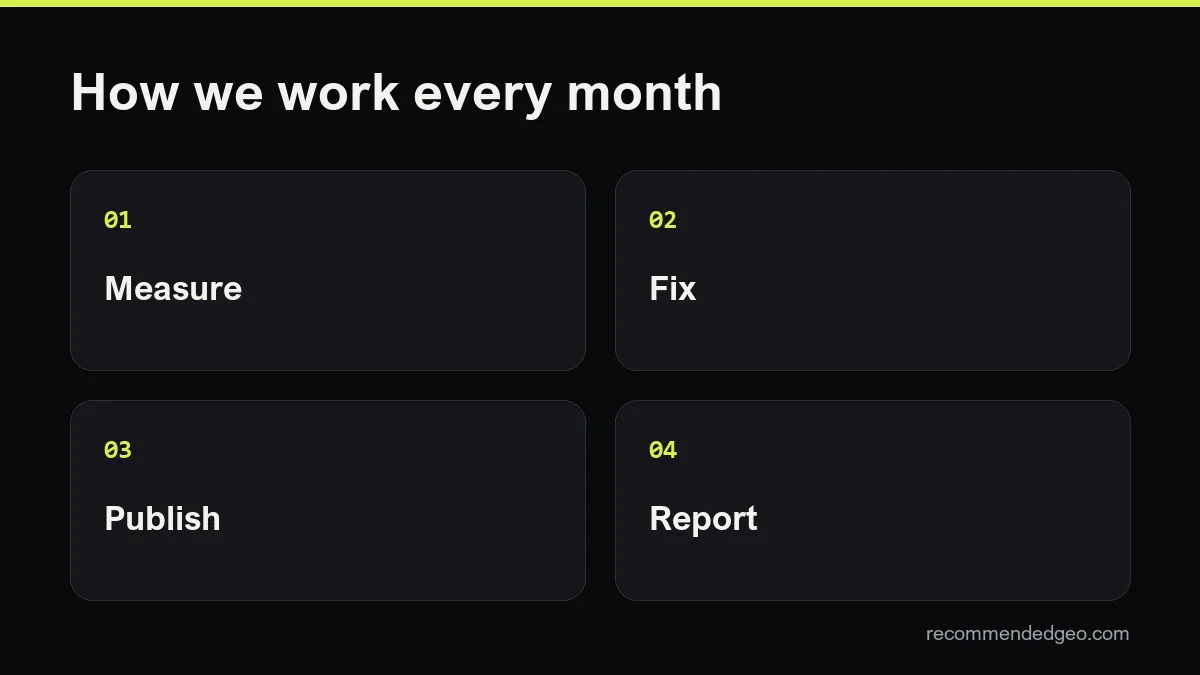
- Month 1: we build the question set with you from sales calls, RFPs and lost deals, following our prompt research method. We run it in ChatGPT, Gemini, Perplexity, Claude, Copilot and AI Overviews, note which vendors are named and which sources are cited, and fix technical access issues.
- Month 2: we rewrite or create the priority pages (sector pages, a comparison page, a pricing explainer, the first case study) and add Organization and Service markup.
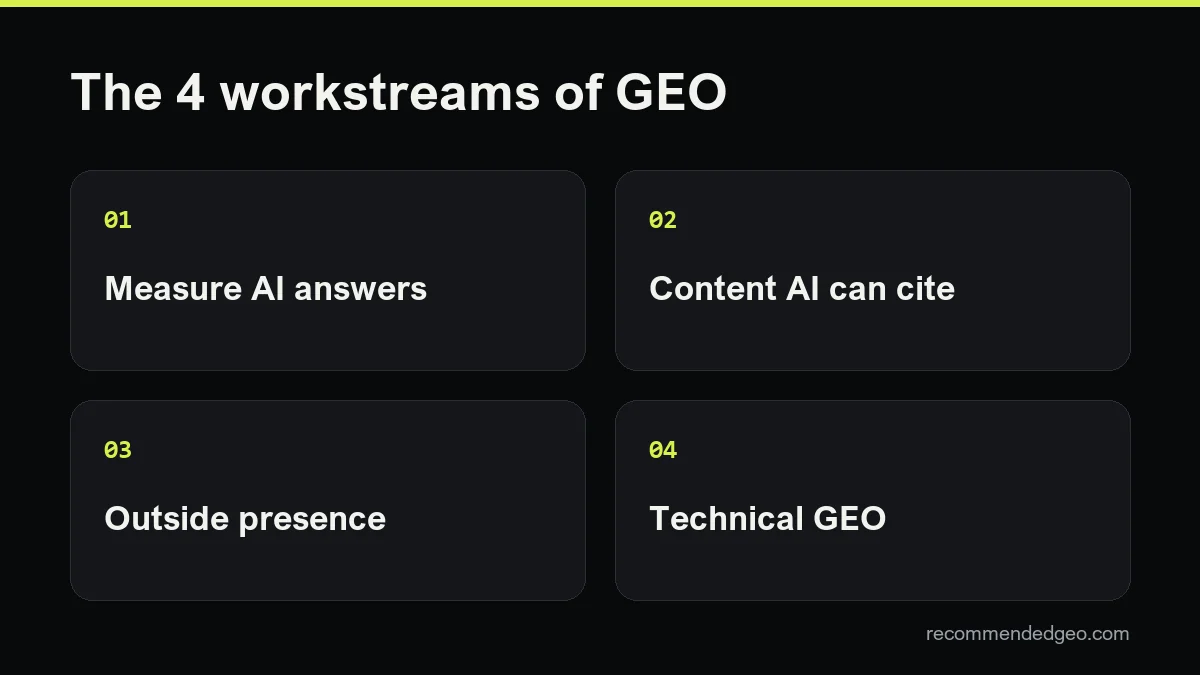
- Month 3: we start outside-presence work on the directories, associations and publications that actually appear in your answers, and align your entity data across them.
- From month 4: we measure, adjust and repeat, adding pages and outside actions every month. The overall approach follows our GEO strategy guide.
Every report shows the real answers the assistants gave, not a score we invented.
Which plan usually fits a B2B company
- Starter, $449 per month: 30 questions tracked every month, 2 pages or articles optimized per month, ongoing technical GEO and a monthly report.
- Growth, $899 per month: 80 questions tracked, 5 pages or articles per month, 2 outside-presence actions per month on the directories and comparisons assistants tend to cite, a report every two weeks and a monthly call.
- Scale, $1,699 per month: 200 questions tracked, 10 pages or articles per month, 5 outside-presence actions per month, a weekly report and a dedicated strategist.
Starter can work for a company selling one service in one market. Most B2B companies with several sectors or countries fit Growth, because outside presence weighs so much in B2B. Scale suits groups with many product lines or markets. Every plan has a three-month minimum. Full details on pricing.
How we start: a free GEO audit
Before any plan, we run a free GEO audit: we check whether assistants can read your site, ask a handful of buyer questions and show you who gets named instead of you and which sources those answers come from. You keep the findings whether or not you hire us.
We do not promise rankings or guaranteed recommendations. Nobody controls what an assistant answers. What we promise is clear work every month and honest reporting on how the answers change.
Frequently asked questions
Is B2B GEO worth it if most of our sales come from referrals?
Referrals still matter. But a referred buyer will often check you with an assistant before the first call, and the answer should match what your contact said about you. B2B GEO makes sure the facts the assistant finds are correct and current.
Do we need to be on Clutch, Kompass or wlw?
Only where your buyers and the assistants actually look. We check which directories appear in the answers for your questions and countries, and we skip the rest.
Can we publish case studies without naming the client?
Yes, as long as the data stays real: sector, company size, problem, approach and results. Anonymized cases are less persuasive than named ones, but far more useful than vague claims.
How long does B2B GEO take to show?
The first changes usually show between the second and the fourth month, and longer when the work depends on third-party publications. That is why every plan has a three-month minimum.
Does this replace our SEO or account-based marketing?
No. It works alongside them. Much of the groundwork, such as clear pages and accurate company data, also helps search and your sales team.