Guide · 9 min read
How to rank on Perplexity: how it chooses and cites sources
Learning how to rank on Perplexity starts with how it builds an answer: it searches its own web index, reads passages from the pages it finds and shows them as numbered citations. This guide explains the two crawlers involved, which pages tend to be cited, nine practical steps, and how to check and measure whether Perplexity mentions you.

How Perplexity finds and cites sources
Perplexity is an answer engine. Each answer comes with links to the sources it used, so users can open them and check. For a business, those links are the visibility that counts: being one of the sources behind an answer about your category.
Perplexity runs its own search index. In a September 2025 research post it said the index tracks over 200 billion unique URLs, that PerplexityBot builds it, and that a machine learning model decides which URLs to index and when to refresh them. Sites that publish or update on a regular cadence get their indexing timed to that rhythm. Source: Perplexity's post on its search architecture.
Three details in that post matter if you want to be cited:
- Pages are split into self-contained passages, and results are retrieved and scored at both document and passage level. One clear paragraph can be what gets picked.
- Ranking combines keyword matching with semantic similarity, followed by rerankers. An early filter removes content judged stale or unresponsive to the query.
- Authoritative domains are prioritised for crawling and indexing. The post does not publish a ranking formula, so be wary of anyone claiming to know exact weights.
When a question needs a specific page right now, Perplexity can also fetch it live. That is the job of its second bot.
PerplexityBot and Perplexity-User: the two names that matter
Perplexity documents two user agents in its official bots guide:
- PerplexityBot surfaces and links websites in Perplexity search results. Perplexity says it is not used to crawl content for AI foundation models, and recommends allowing it in robots.txt.
- Perplexity-User fetches a page when a user's question needs it, and that page may be linked in the answer. Because a person triggered the visit, Perplexity says this fetcher generally ignores robots.txt rules.
Perplexity publishes the IP ranges of each bot as JSON files and says robots.txt changes can take up to 24 hours to apply. It also warns that Cloudflare's Bot Fight Mode can still challenge its bots even if you write a custom rule to let them in.
In practice, if PerplexityBot is blocked by robots.txt, a firewall or a CDN setting, your pages are unlikely to be in the index Perplexity searches. Our guide to robots.txt for AI bots has files you can copy and a checklist for CDN rules.
Search, Pro Search and Deep Research
The same question can produce different sources depending on the mode. At the time of writing, Perplexity's help center describes three levels:
- Search gives a quick answer from a smaller set of sources.
- Pro Search runs several searches, draws on articles, academic papers, forums and videos, and synthesises dozens of sources. It is no longer a separate toggle: it applies automatically when the user's plan includes it, up to the plan's limit.
- Deep Research searches, reads, decides what to look for next and writes a long report. It is included in the Pro and Max plans with monthly limits.
Longer modes cite more pages, which gives smaller sites more chances. They also split a broad question into narrower ones, so a page that answers one sub-question well can end up cited inside a long report.
Paying users can choose which model writes the answer. As Perplexity describes it, the sources still come from its search step, so the work on your pages does not change with the model.
Which pages Perplexity tends to cite
Perplexity does not publish a list. What follows is based on that architecture post and on how retrieval-based answers generally work. Treat it as a pattern, not a rule.
- Pages that answer the exact question near the top, in a paragraph that still makes sense when lifted out on its own.
- Comparisons, best-for lists and reviews on independent sites, for questions where people weigh options.
- Documentation, help pages and pricing pages that state facts plainly: prices, limits, compatibility, opening hours.
- Recently updated pages for anything time-sensitive, with a visible date.
- Forum and community threads, Reddit in particular, for questions about experience.
- Pages on domains that already rank or are widely cited for the topic.
Several of these live on other people's sites. For many buying questions, the citation that names you is a review, a list or a thread you do not control. That is why work outside your own site is part of the job.
How to rank on Perplexity: 9 steps
- Let PerplexityBot in. Check robots.txt, your firewall, CDN bot settings and hosting protection, then look for 200 responses to PerplexityBot in your server logs.
- Write down the questions. List 20 to 50 real questions buyers ask about your category, in their words, including comparisons and best-for questions.
- Give each important question a page or a section. Open with a direct answer of two or three sentences, then add the detail. Our guide on how to write content AI cites covers the format.
- State facts in text. Prices, plans, locations, specifications and who the product suits should be readable in the HTML, not only inside images, PDFs or scripts.
- Keep key pages fresh. Update them when something changes, show the date and keep the lastmod in your sitemap accurate. Perplexity's index refreshes on a predicted cadence and filters stale content.
- Publish honest comparisons. A page that compares you with alternatives, including cases where they fit better, answers the kind of question people bring to buying research.
- Earn mentions on the sites it already cites. Run your questions, note the domains that keep appearing, and work on being listed, reviewed or quoted there.
- Take part where your buyers ask. Helpful, disclosed answers on Reddit or industry forums can surface as citations; read Reddit for AI search before you start.
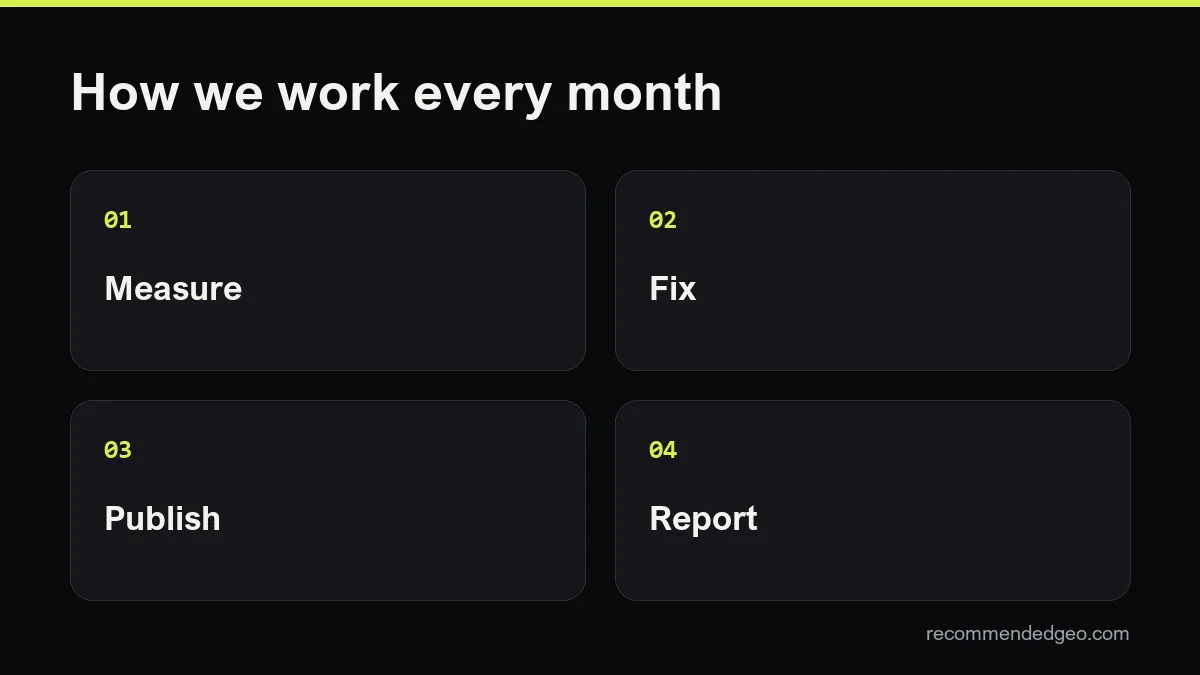
- Repeat and measure. Run the same questions every month and record which sources appear. Without a baseline you cannot tell whether anything worked.
Shopping and publisher programs: what is active
Perplexity has launched programs for merchants and publishers. Check the current terms before planning around them, because these features change often.
- Shopping. In November 2024 Perplexity introduced shopping answers with product cards and a free Merchant Program for large retailers. It said merchants in the program have a better chance of being recommended because their product details are more complete in its index, that product cards are not sponsored, and that a Shopify integration supplies product data. In late November 2025 press coverage reported that shopping with PayPal checkout was opened to all US users for free. Source: Perplexity's shopping announcement.
- Publishers. The Publishers' Program launched in July 2024 with revenue sharing for partners such as TIME and Der Spiegel. In August 2025 Perplexity announced Comet Plus, a 5-dollar subscription included in Pro and Max, which shares revenue with participating publishers based on human visits, search citations and agent actions. Publishers apply by email.
For most businesses neither program replaces the basics. They are worth a look if you are a large retailer with a product catalogue or a publisher with original reporting.
How to check whether Perplexity cites you
- Use a clean session, logged out or in a private window, so memory and past questions do not shape the answer.
- Ask your list of questions the way a buyer would, without naming your brand.
- Open the sources and record every cited domain, the position of yours, and whether the text of the answer names you.
- Follow the related questions Perplexity suggests. Many buying journeys continue there.
- Repeat on another day. Answers vary between runs, so one check tells you little.
To automate this, Perplexity's Sonar API returns the cited URLs and search results with each response, so you can log sources over time. API answers can differ from the app, so keep doing spot checks by hand.
How to measure results
Track citations and traffic separately. They move at different speeds.
- Citation share: for your fixed question set, the share of answers that cite or name you, month by month. This is usually the first number to move.
- Competitor share: the same measure for the two or three brands you most often lose to.
- Referral traffic: sessions with perplexity.ai as referrer in your analytics. Create a channel group for AI assistants so it does not vanish into generic referrals.
- Conversions from that traffic, so you judge it by what it brings in, not only by sessions.
Many people read the answer and never click, so traffic understates visibility. Our guide on how to measure AI visibility explains how to set up the question set and a monthly report.
Common mistakes
- Blocking PerplexityBot under a blanket rule against AI training. Perplexity says this bot does not crawl for foundation models.
- Trying to stop Perplexity-User with robots.txt alone. If you really need to block it, that happens at the server or CDN.
- Writing around one keyword instead of answering the whole question, with its conditions and trade-offs.
- Expecting results in days. Indexing, refresh cycles and third-party mentions take weeks to months.
- Buying reviews or posting undisclosed promotion on Reddit. Communities remove it, and the reputational cost outlasts any mention.
Where this fits in GEO
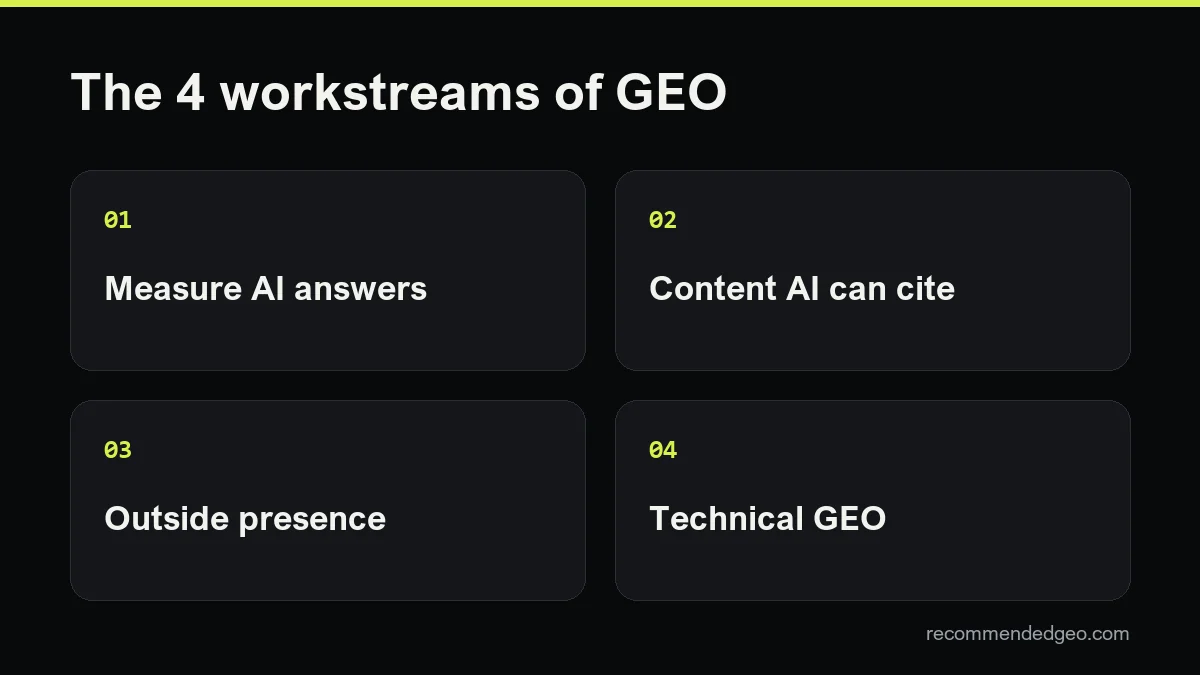
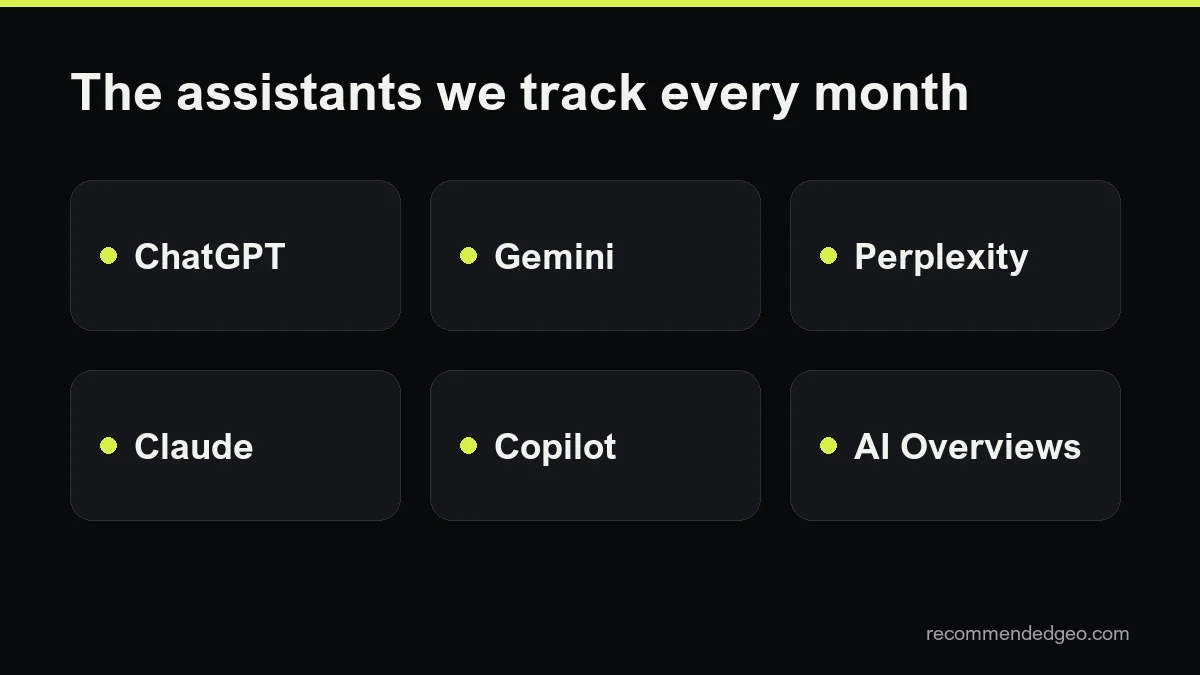
Perplexity is one assistant among several, and the work overlaps heavily with ChatGPT, Gemini and Copilot. Knowing how to rank on Perplexity is one part of generative engine optimization: access, citable pages, outside mentions and measurement. A free GEO audit shows where you stand on each.
Frequently asked questions
Is PerplexityBot used to train AI models?
Perplexity says no. PerplexityBot surfaces and links websites in its results and is not used to crawl content for foundation models, so you can block training crawlers and still allow it.
Can I pay to appear in Perplexity answers?
Perplexity says its shopping product cards are not sponsored, and its publisher programs pay publishers rather than selling placement. At the time of writing we found no documented way to buy a citation inside an answer.
How long does it take to get cited?
It depends on whether you are already indexed and how contested the question is. Access fixes apply after the robots.txt delay of up to 24 hours; new pages and outside mentions usually take weeks to months, so measure monthly.
Does Perplexity use Google results?
Perplexity describes its own index built by PerplexityBot. In October 2025 Reddit sued Perplexity and three data firms, alleging Reddit content was obtained by scraping Google results, and Perplexity said it would fight the claims. For your site the advice is the same: let PerplexityBot in and stay strong in classic search too.
Is how to rank on Perplexity different from SEO?
Much overlaps: crawlable pages, clear answers and authority. The differences are passage-level retrieval, the weight of third-party lists and forums, and measuring citations instead of positions. For Google's version, see how to appear in AI Overviews.