Industry · 8 min read
GEO for real estate: be the agency AI assistants suggest
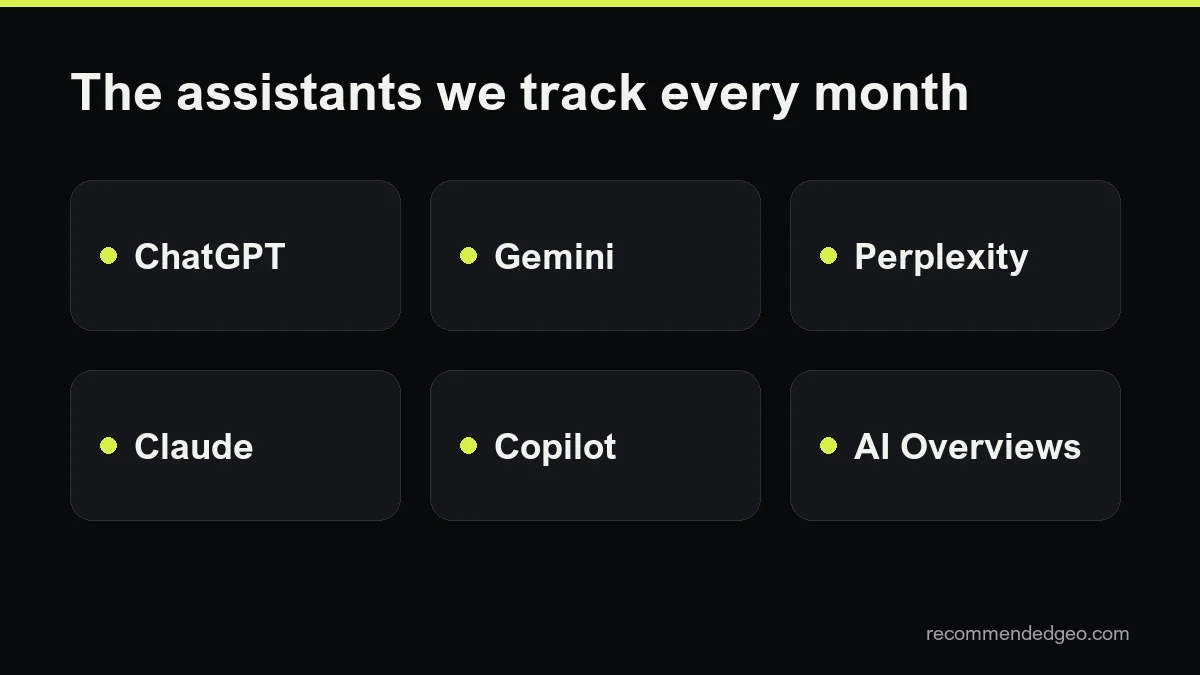
Home sellers now ask ChatGPT, Gemini, Perplexity, Claude and Copilot which agent to call, and buyers ask them what a neighbourhood is like before they open a portal. GEO for real estate is the work of making sure your agency is described correctly and has a fair chance of being named in those answers. This page covers where the answers come from in property, which pages and markup help, the advertising rules to respect and what we do each month.

How buyers and sellers ask AI assistants about property
Property questions are local, personal and often long. People describe their situation and expect a recommendation, not a list of links. A few examples of the patterns we test (written by us as illustrations, not quotes from real users):
- Seller: "Which estate agents in Bristol are good at selling flats quickly, and what fees should I expect?"
- Valuation: "How do I find out what my three-bed house in Leeds is worth before I talk to an agent?"
- Buyer: "Is Chorlton a good area for a family with two kids, and what do houses cost there?"
- Relocation: "We're moving to Austin for work. Which neighbourhoods should we look at and which realtors know them well?"
- Investor: "What should I check before buying a rental apartment in Lisbon as a foreigner?"
Some of these end with a list of agencies. Others end with an explanation that cites a few sources, and those sources are often an agency's area guide or a portal page. Both kinds matter: being named and being cited.
There is a second shift. Several property portals now run apps inside ChatGPT: Zillow announced its app in October 2025, and portals such as Realtor.com and Rightmove followed. When a buyer searches listings that way, your stock appears through the portal, so the quality of your portal listings now feeds AI answers directly.
What GEO for real estate covers
Generative engine optimization is about how assistants understand and recommend a business. In property that splits into three jobs:
- Agency questions: who to sell with, who to rent through, who specialises in new builds, rentals or high-end homes in a given area.
- Area and price questions: what a neighbourhood is like, how prices have moved, what a home might be worth. Your local knowledge can be the source here.
- Listing questions: specific homes for sale or rent. These mostly come through portals and their apps, so your job is accurate, complete listings.
If GEO is new to you, start with what GEO is. Real estate shares a lot with other local services, so the GEO for local businesses page is useful background.
Where assistants get their answers: portals, maps and reviews
Assistants combine their search index, maps data and pages they consider trustworthy. In property, the sources that come up again and again are:
- Property portals. In the US, Zillow, Realtor.com, Redfin and Homes.com; in the UK, Rightmove, Zoopla and OnTheMarket; in Canada, REALTOR.ca; in Australia, realestate.com.au and Domain. Agent and office profiles on these sites are read alongside the listings.
- Google Business Profile and maps. Category, service area, opening hours, photos and, above all, reviews. Apple Maps and Bing Places matter for Siri and Copilot.
- Review and agent comparison sites. Google reviews first, then sector sites such as allAgents in the UK or RateMyAgent in Australia, where they are actually used.
- Local media and guides. News coverage, "best agents in X" articles, relocation guides and community forums, including Reddit threads about specific towns.
- Your own site. Area guides, sold-price commentary, valuation pages and agent biographies, if they are specific enough to quote.
Which of these weigh most depends on the country, the city and the assistant. That is why we measure your real questions before deciding where to act. The method is in how to measure AI visibility.
Pages a real estate website needs for AI answers
Most agency sites are a listings feed plus a contact form. That gives assistants little to work with. The pages that tend to earn citations are:
- Area and neighbourhood guides. One page per area you actually cover: housing types, typical price ranges with a date and source, schools, transport, what kind of buyer it suits. Written by someone who knows the streets, updated at least yearly.
- Valuation page. How you value a home, what you need from the owner, how long it takes and what it costs (if it is free, say so). Explain the difference between an online estimate and an in-person valuation.
- Selling and letting guides. Fees, timelines, steps and documents, in plain language, for your market.
- Agent profiles. A page per agent with areas covered, languages, specialities, licence or registration details where relevant, and recent sales the agent is allowed to show.
- Market updates. Short, dated notes on local prices and stock, linked to the official data you used.
Write the answer first, then the detail. Our guide on writing content AI cites shows how to structure these pages so a passage can be lifted cleanly.
Structured data: RealEstateAgent and the rest
Schema.org has a specific type for agencies, RealEstateAgent, a subtype of LocalBusiness. Google's guidance is to use the most specific subtype that fits, so use it on the agency and branch pages, with name, address, telephone, opening hours, area served and links to your portal and social profiles in sameAs.
- Person markup on agent profiles, linked to the agency with worksFor.
- One RealEstateAgent entity per branch, each with its own address, matching its Google Business Profile.
- BreadcrumbList across area guides so the geographic hierarchy is clear.
- RealEstateListing exists but is still a pending type on schema.org. Use it only if it describes the page accurately, and don't expect a rich result from it.
Don't mark up your own reviews as an aggregate rating for the agency. Google does not show review stars for reviews a business publishes about itself, and the markup adds nothing for assistants.
Advertising rules worth checking before you publish
Property marketing is regulated, and AI-friendly content is still advertising. This is general information, not legal advice; check the rules in your market with your professional body.
- United States: the Fair Housing Act prohibits ads that indicate a preference or limitation based on protected characteristics. Neighbourhood descriptions should stick to facts about housing, transport and amenities, not who lives there. Agents are also licensed by state, with their own advertising rules.
- United Kingdom: Trading Standards guidance on material information sets out what listings should disclose, and estate agents must belong to an approved redress scheme.
- Energy information: many European countries require the energy rating in sale and rental ads. That includes your own site and any listing pages assistants may read.
We flag anything in this area during the work, but you or your compliance contact sign off on it.
What we do for real estate agencies each month
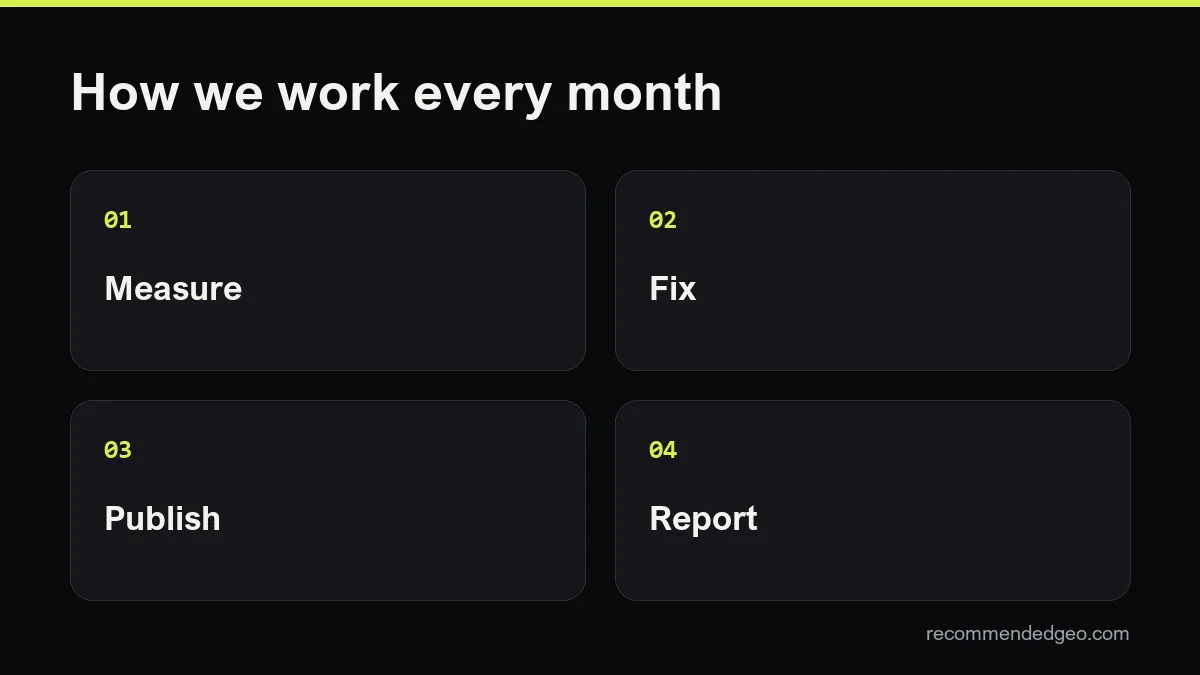
- Measure. A fixed set of seller, buyer and area questions for your towns, tested every month in the assistants you care about. See prompt research for how we build it.
- Fix the facts. Google Business Profile, portal office profiles and directory listings checked for consistent names, addresses, areas and fees.
- Build or rewrite pages. Area guides, valuation page, agent profiles and selling guides, a set number per month depending on the plan.
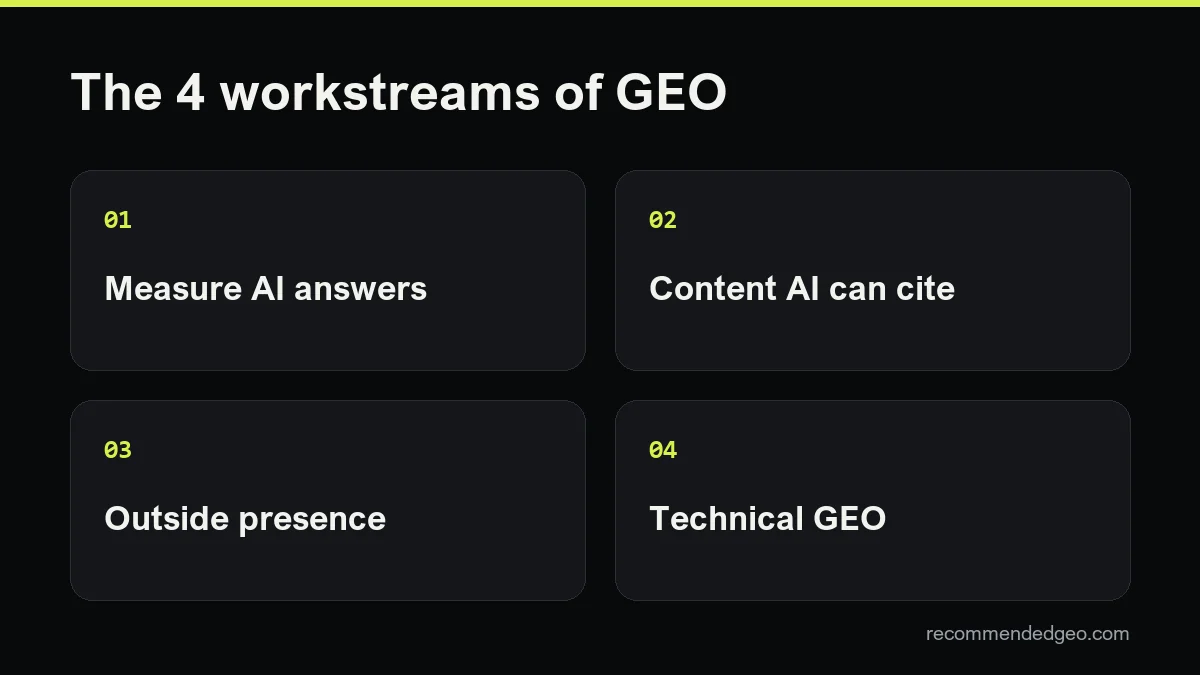
- Technical GEO. Crawler access, schema, page speed and indexing of the pages that matter.
- Outside presence. On Growth and Scale, actions on the local media, guides and comparison sites that assistants cite in your area. More on this in brand mentions for AI.
- Report. What we changed, how answers moved and which sources were cited.
Which plan usually fits
- Starter, $449 per month: 30 questions tracked every month, 2 pages or articles optimized per month, ongoing technical GEO and a monthly report. Fits a single-office agency covering a few areas.
- Growth, $899 per month: 80 questions tracked, 5 pages or articles per month, 2 outside-presence actions per month, a report every two weeks and a monthly call. Usually the right size for an agency with several branches or both sales and lettings.
- Scale, $1,699 per month: 200 questions tracked, 10 pages or articles per month, 5 outside-presence actions per month, a weekly report and a dedicated strategist. For regional networks or agencies in several cities or countries.
Every plan has a three-month minimum. Full details are on pricing. We don't guarantee that any assistant will recommend you; nobody controls those answers. GEO for real estate improves the conditions and measures the outcome honestly.
How we start
We begin with a free GEO audit: a sample of seller and buyer questions for your area, how assistants answer them today, which agencies and sources they name, and the first fixes we would make. If GEO for real estate makes sense for you after that, we agree the question set and start on the plan that fits.
Frequently asked questions
Do portals like Zillow or Rightmove make agency websites irrelevant for AI?
No. Portals dominate listing searches, but questions about which agent to choose, what an area is like or how valuations work are often answered from agency sites, reviews and local guides.
Will you write area guides for every postcode we cover?
No. We prioritise the areas where you actually sell and where buyers ask questions, and we write fewer, better pages. Thin pages with swapped place names rarely get cited.
Do online valuation tools help GEO for real estate?
They can bring leads, but the tool itself is rarely what assistants cite. A clear page explaining how you value homes, with real local context, is more useful to them.
How long until we see changes?
Profile and technical fixes can show within weeks. Changes that depend on new pages and outside mentions usually take a few months, which is why the minimum is three months.
Do you work with agencies outside English-speaking countries?
Yes. We work in English, Spanish, Portuguese, French, German and Italian, and adapt the portal and directory work to each market.