Comparison · 6 min read
GEO Agency vs SEO Agency: Which Do You Need?
If you already pay an SEO agency, the obvious question is whether they can handle AI search too or whether you need someone else. This guide is about that buying decision: who does what, when one is enough and how to combine them.
Our monthly plans are public, so you can compare them with what your SEO agency already covers.

The decision in one paragraph
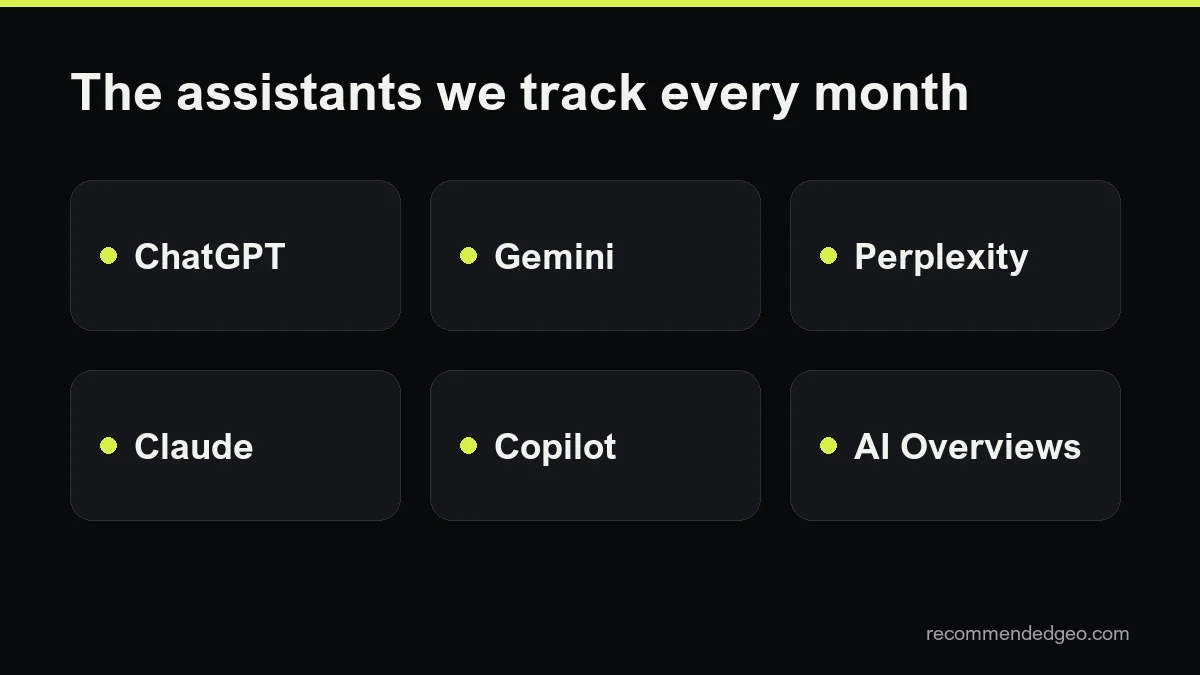
If most of your buyers still find you through Google results and your SEO agency already covers structured data, clear page copy and your presence on review sites, you may not need a second agency yet. If buyers in your category increasingly ask ChatGPT, Perplexity or Gemini for recommendations, and nobody is checking what those assistants say about you or working on the third-party sources they rely on, that gap is what a GEO agency fills.
For the differences between the two disciplines themselves, read GEO vs SEO. This page assumes you know them and are deciding who should do the work.
What each agency usually does
An SEO agency works to get your pages ranking in search results and turn that traffic into leads or sales. Typical work: keyword research, technical fixes, content, link building and reporting on rankings, clicks and conversions from Google Search Console and analytics.
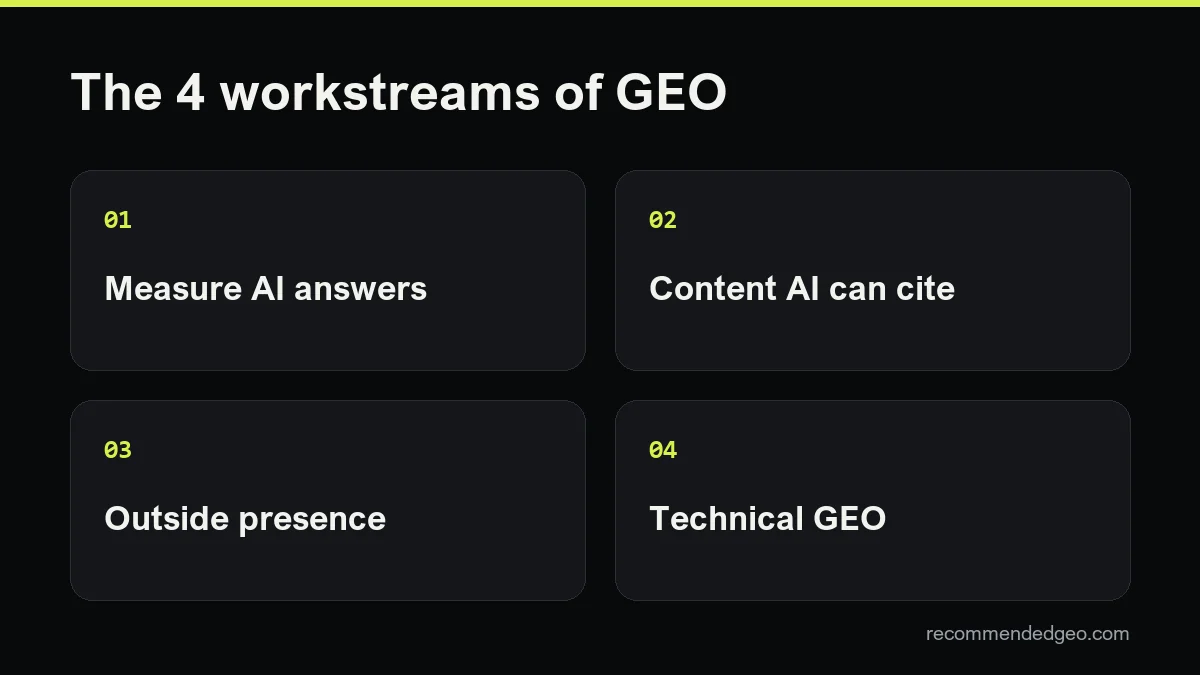
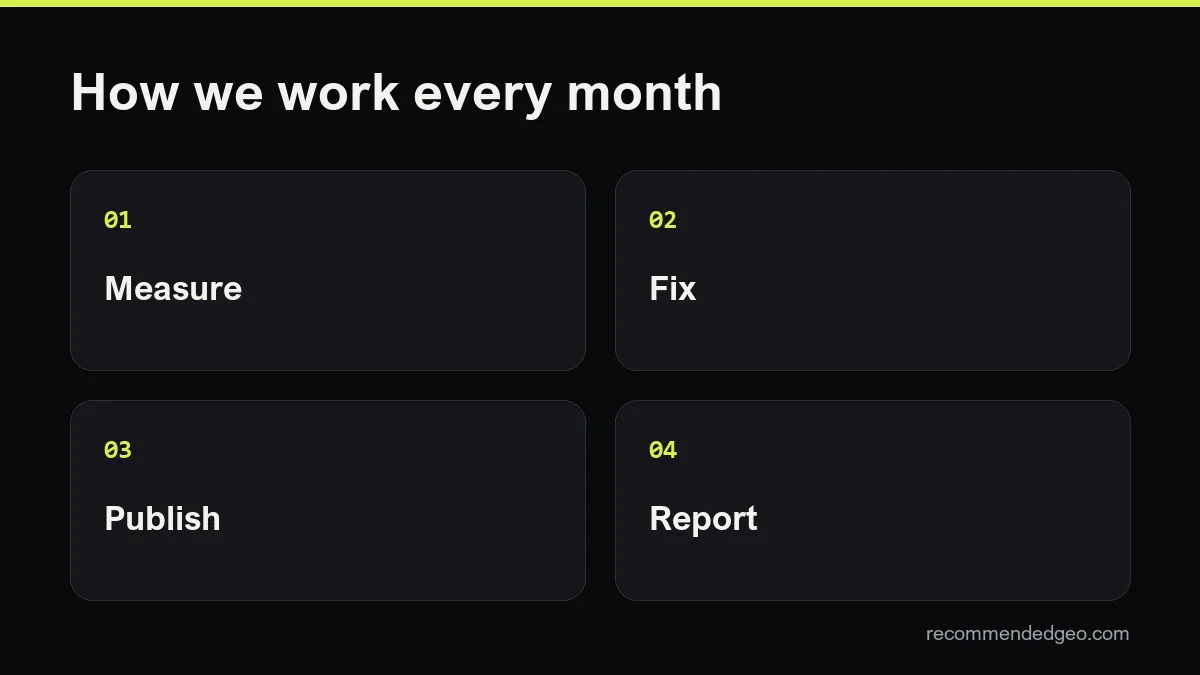
A GEO agency works on whether AI assistants know your brand, describe it correctly and include it when people ask for options. Typical work: tracking a fixed set of buyer questions across several assistants, fixing crawler access and brand facts, and getting you into the directories, comparisons and reviews those assistants tend to draw on. The GEO agency guide covers the work and the monthly deliverables in detail.
GEO agency vs SEO agency, side by side
- Main goal. SEO agency: rankings and organic traffic. GEO agency: mentions and accurate descriptions in AI answers.
- Where the work happens. SEO agency: mostly your own site, plus links. GEO agency: your site and a lot of third-party sources.
- What gets measured. SEO agency: positions, clicks, conversions. GEO agency: how often and how you appear in tracked answers, compared with competitors.
- Data available. SEO agency: mature tools and Search Console. GEO agency: answers vary by user and date, so tracking relies on repeated checks.
- Overlap. Structured data, clear page copy, consistent brand information and technical health matter to both.
When your SEO agency is enough
- Your buyers rarely use AI assistants to choose a provider in your category, or you have no sign that they do yet.
- Your agency already reviews AI crawler rules in robots.txt, keeps schema valid and updates your profiles on the main review sites and directories.
- Your budget only covers one agency and your organic search basics are still unfinished. Fix those first; a lot of it helps GEO too.
When a GEO agency makes sense
- Prospects or customers mention that they found you, or a competitor, through ChatGPT or another assistant.
- You rank well on Google but competitors are the names that come up when you ask assistants for recommendations yourself.
- Your SEO agency's reports say nothing about AI answers and they can't tell you how they would measure them.
- Your brand facts are inconsistent across the web: old prices, wrong categories, outdated descriptions on directories.
How to combine them
Running both works when responsibilities are written down. Without that you pay twice for the same schema fixes, or each side assumes the other is handling something.
- Agree who owns the site. Usually the SEO agency or your developer keeps control of the code and the CMS; the GEO agency sends specific change requests.
- Share one list of priority pages and questions, so content written for search also answers the questions you track in assistants.
- Split off-site work clearly: link building stays with SEO, listings, comparison articles and review profiles go to GEO, or the other way round, but not both.
- Read both reports together once a month. Changes in one channel often explain movements in the other.
Questions to ask your current SEO agency
Before hiring anyone new, put these to the agency you already pay. Their answers will tell you whether the gap is real.
- Which AI crawlers does our robots.txt allow, and did you check our CDN or firewall too?
- Which buyer questions would you track in AI assistants, and how often?
- What do the main assistants currently say about us and our competitors, and how did you check?
- Which third-party sites do you think matter for AI answers in our category, and are we on them?
- Is any of this included in what we pay now, or would it be extra?
If the answers are clear and specific, you may only need to adjust their scope. If they are vague, a free GEO audit gives you a written baseline to compare. You can also see what we charge on the pricing page, or browse other guides.
Frequently asked questions
Can my SEO agency do GEO?
Some can, especially those that already work on structured data, brand consistency and review sites. Ask how they would track AI answers and which third-party sources they would work on. Specific answers are a good sign.
Do I need both a GEO agency and an SEO agency?
Not always. Many smaller companies are fine with one agency that covers the basics of both. Two make more sense when AI assistants are already a real channel in your category and your SEO agency doesn't cover them.
Will a GEO agency replace my SEO agency?
It shouldn't. GEO does not cover keyword strategy, link building or conversion work for search traffic. A good GEO agency works alongside whoever handles your SEO.
Is GEO cheaper than SEO?
Pricing varies widely in both. Compare scope: how many questions are tracked, how many pages are worked on and how much off-site work is included. Our plans are $449, $899 and $1,699 per month with a three-month minimum.
How do I avoid paying twice for the same work?
Write down who owns the site, who handles each type of off-site work and which pages each team works on. Review both reports together every month.
Do you do SEO?
The basics, yes, on every plan: a technical review, Search Console and Bing, titles and internal links on the pages we work on and, if it applies, your Google Business Profile. Growth adds a monthly SEO health check and Scale adds keyword research and content for Google. We don't run link-building campaigns or migrations: our priority is GEO.